Skip Navigation Links weather.gov 
NOAA logo - Click to go to the NOAA homepage National Weather Service   NWS logo - Click to go to the NWS homepage
The Weather Prediction Center


Follow the Weather Prediction Center on Facebook Follow the Weather Prediction Center on X
WPC Home
Analyses and Forecasts
   National High & Low
   WPC Discussions
   Surface Analysis
   Days ½-2½ CONUS
   Days 3-7 CONUS
   Days 4-8 Alaska
   QPF
   PQPF
   Flood Outlook
   Winter Weather
   Storm Summaries
   Heat Index
   Tropical Products
   Daily Weather Map
   GIS Products
Current Watches/
Warnings

Satellite and Radar Imagery
  GOES-East Satellite
  GOES-West Satellite
  National Radar
Product Archive
WPC Verification
   QPF
   Medium Range
   Model Diagnostics
   Event Reviews
   Winter Weather
International Desks
Development and Training
   Development
WPC Overview
   About the WPC
   WPC History
   Other Sites
   FAQs
Meteorological Calculators
Contact Us
   About Our Site
 
USA.gov is the U.S. Government's official web portal to all federal, state, and local government web resources and services.
 
Short Range Public Discussion
 
(Caution: Version displayed is not the latest version. - Issued 1848Z Dec 01, 2025)
 
Version Selection
Versions back from latest:  0   1   2   3   4   5   6   7   8   9   10   
 
Abbreviations and acronyms used in this product
 
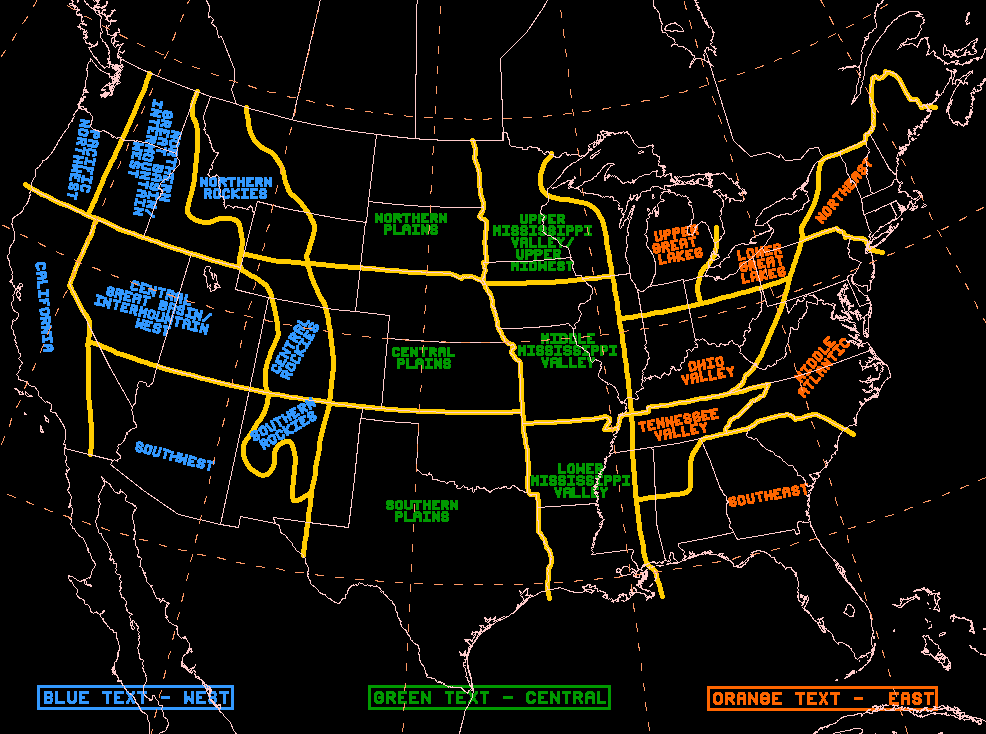
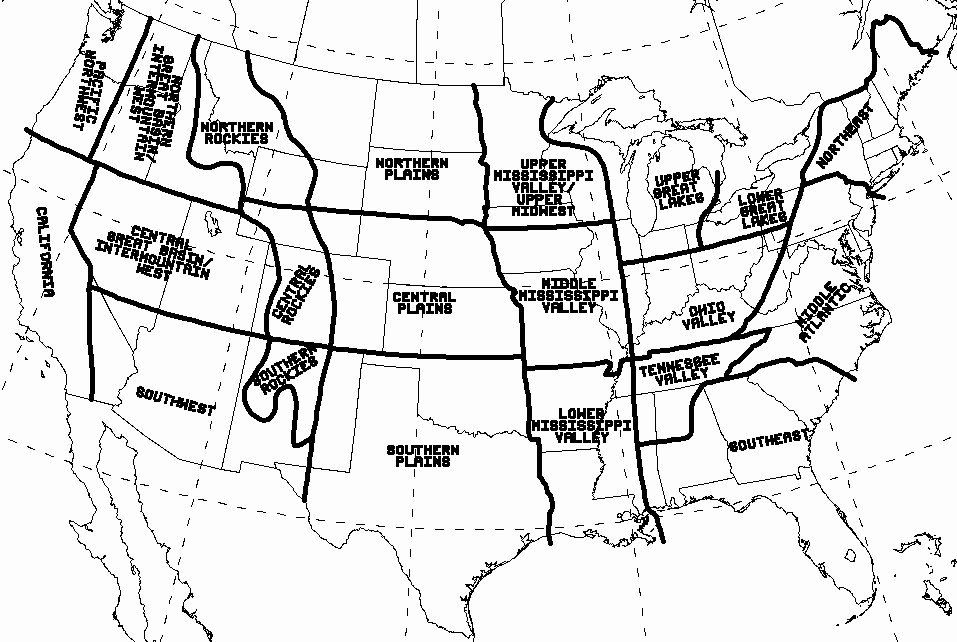
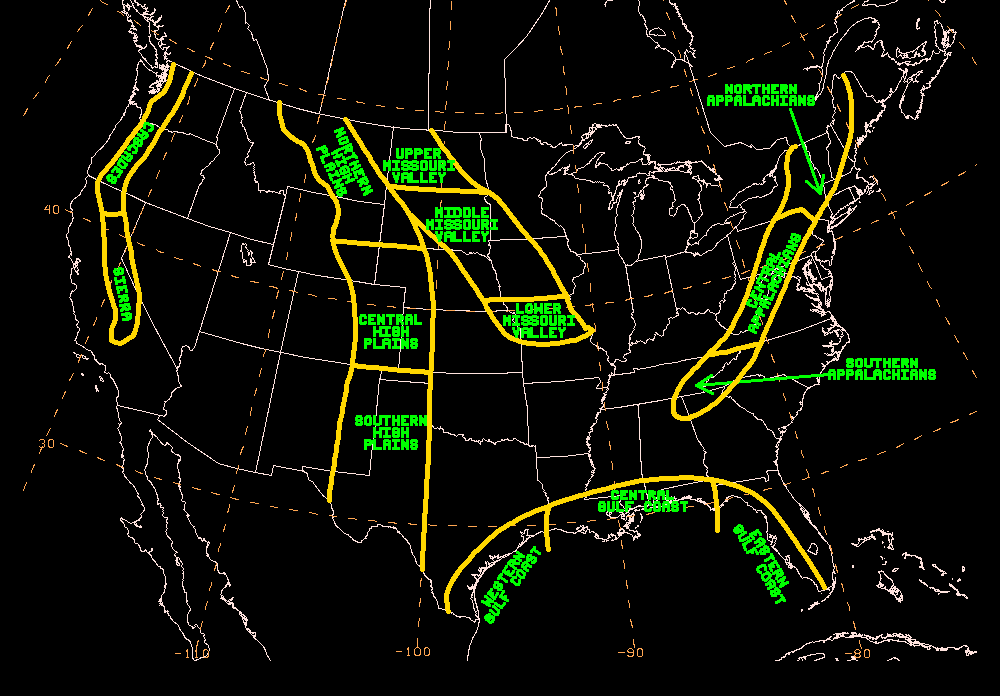
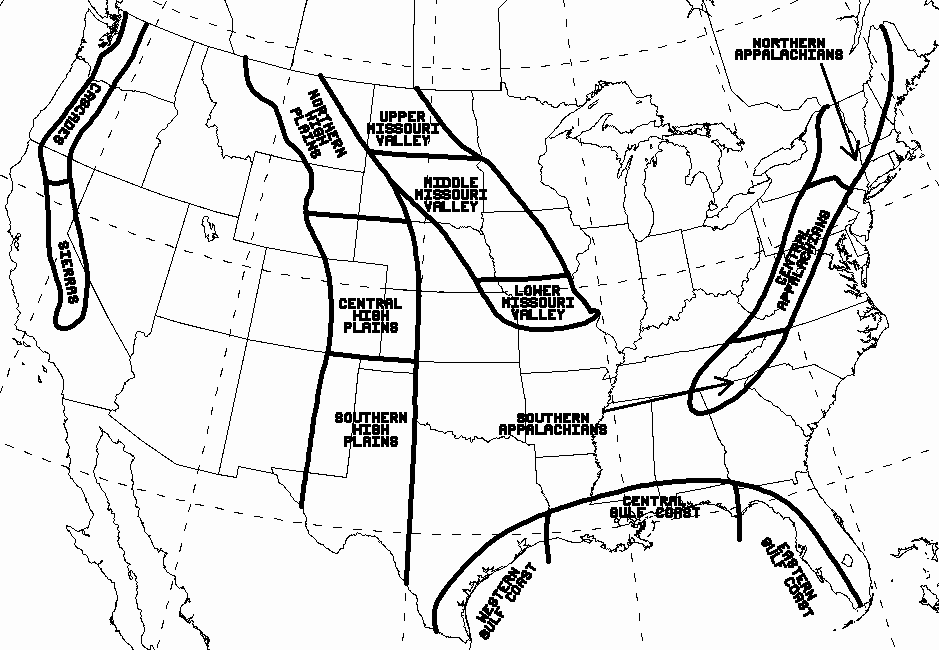
Geographic Boundaries -  Map 1: Color  Black/White       Map 2: Color  Black/White

Short Range Forecast Discussion NWS Weather Prediction Center College Park MD 148 PM EST Mon Dec 01 2025 Valid 00Z Tue Dec 02 2025 - 00Z Thu Dec 04 2025 ...Monday will bring a messy wintry mix across the Ozarks/Mid-South into the Ohio Valley with light to moderate snowfall for portions of the Midwest/Lower Great Lakes... ...First winter storm of the season expected for New England and the inland Mid-Atlantic late Monday into Tuesday with heavy snow and impactful icing... ...Chilly temperatures continue across much of the eastern and central U.S. in a winter-like pattern... Snow showers continue over parts of the Central Plains and west of the Mississippi Valley as the upper-level trough sits over central CONUS. The upper-wave moves eastward into the Mississippi Valley and the Great Lakes by Tuesday morning and will interact with colder air, which will bring a wintry mix across portions of the Upper Midwest and will eventually transition to accumulating snow across eastern portions of the Upper Midwest and the Great Lakes. Lake-effect will also support on and off snow development over the next few days. Snow amounts are expected to remain light to moderate (~2-4"), with possible locally higher totals. Further south, the upper-wave will continue to push the surface low over Southern Plains into the Ohio Valley and will pool moisture from a shortwave over the Gulf, bringing chances for precipitation over portions of the Gulf Coast and Southeast tonight, with the highest precipiation amount over the Lower Mississippi Valley into the Tennessee Valley. Storm Prediction Center has issued a Marginal Risk (level 1/5) for Severe Thunderstorms over portions of Alabama tonight and the Florida Panhandle through Tuesday. Some moderate to locally heavy rainfall will be possible, with an isolated risk for flash flooding as the Weather Prediction Center has portions of the Gulf Coast and Deep South under a Marginal Risk (level 1/4) for Excessive Rainfall. While the system continues to move northeastward Tuesday, expect possible freezing rain and icy conditions over central/southern Appalachians, that can make traveling hazardous, as well as, possible showers and thunderstorms along the East Coast. As the low continues to deepens over New England and the mid-level moisture interact with the colder air north of the system, much of New England and the Mid-Atlantic will experience enhanced winter precipitation and possible gusty winds, especially inland from the coast, bringing the first impactful winter storm of the season. Although uncertainty remains with respect to specific totals, the threat for significant snow accumulations across the interior is rising, with more than 6" possible north and west of the I-95 corridor. Over the west, another progressive upper level trough will approach the coastline, bringing another rough of precipiation over the Pacific Northwest/northern Rockies by this evening, bringing lower elevation/coastal rain and inland/higher elevation snow. Snow showers will spread southward over the Great Basin/central Rockies by Tuesday morning. Some moderate snow accumulations are expected but should be limited to the regional mountain ranges. Just to the northeast, an additional quick moving clipper-like system will bring some light snow showers to the northern Plains Tuesday, and some more moderate snowfall across the Upper Great Lakes Tuesday night. As the upper-wave continues to move through CONUS, temperatures will continue to trend well-below average over eastern and central U.S. as this winter-like pattern continues, featuring broad, stagnant upper-toughing and repeated cold frontal passages. Forecast highs the next couple of days generally range from the teens and 20s across the northern Plains/Midwest; the 30s and 40s for the central Plains, Ohio valley, and Northeast/Mid-Atlantic; and the 40s and 50s from Texas into the Southeast. Areas along the Gulf Coast Monday and into the southeast Atlantic Tuesday south of the frontal boundary will see much warmer highs into the 60s. Downsloping winds off the Rockies will also bring a warm up to the High Plains on Tuesday as temperatures rise into the 30s/40s north and 50s/60s south. Conditions remain closer to average across the West, with highs in the 40s for the interior, 50s and 60s along the West Coast, and 60s and 70s in the Desert Southwest. Oudit/Putnam Graphics available at https://www.wpc.ncep.noaa.gov/basicwx/basicwx_ndfd.php