Probabilistic Heavy Snow and Icing Discussion
NWS Weather Prediction Center College Park MD
328 AM EDT Sat Mar 14 2026
Valid 12Z Sat Mar 14 2026 - 12Z Tue Mar 17 2026
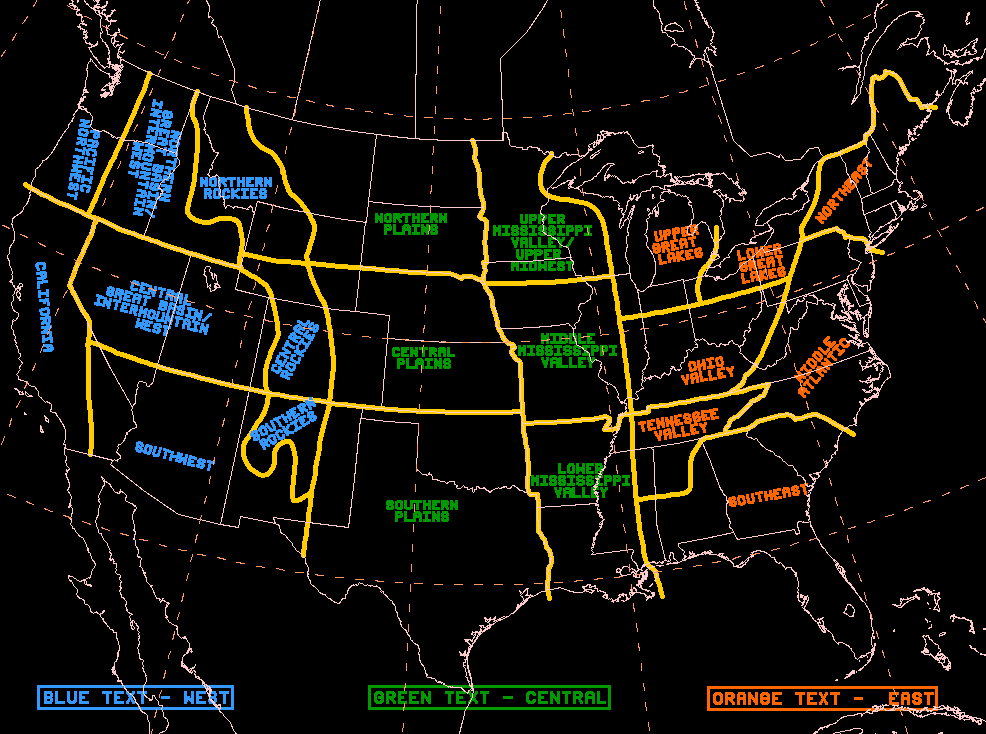
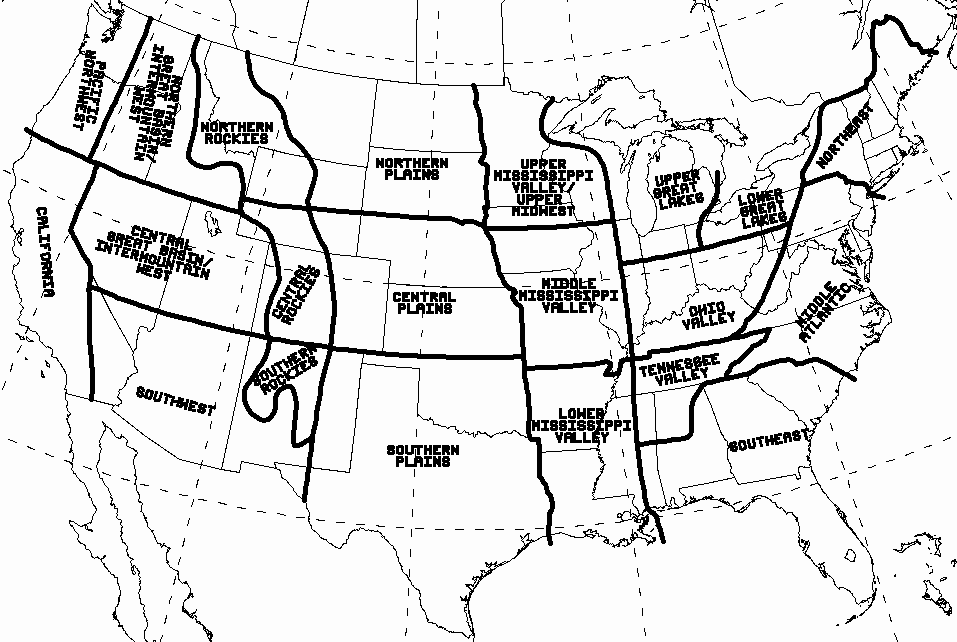
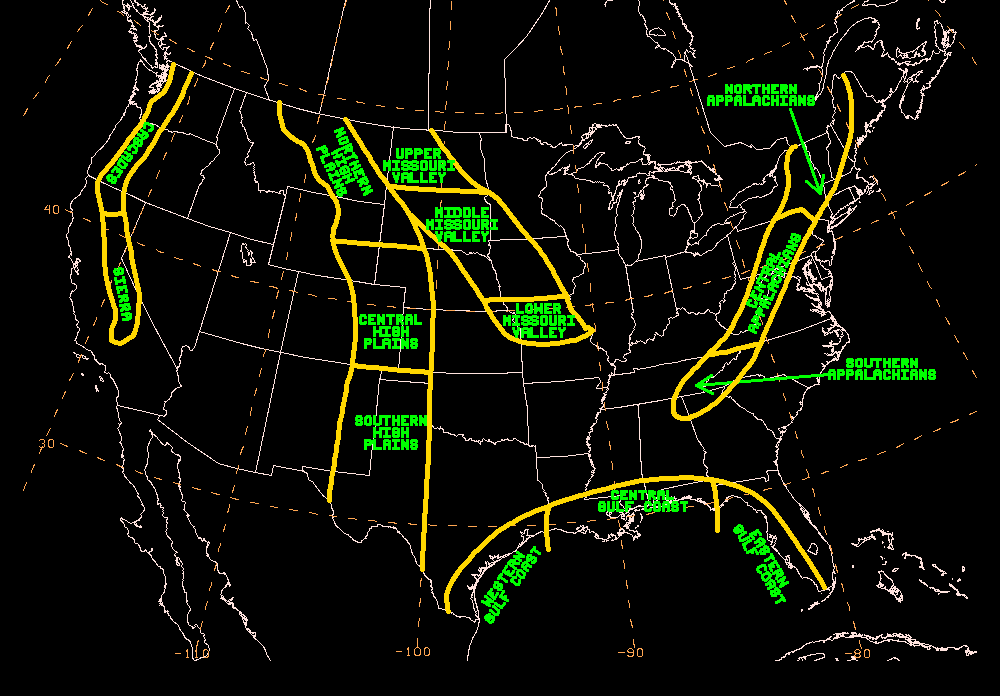
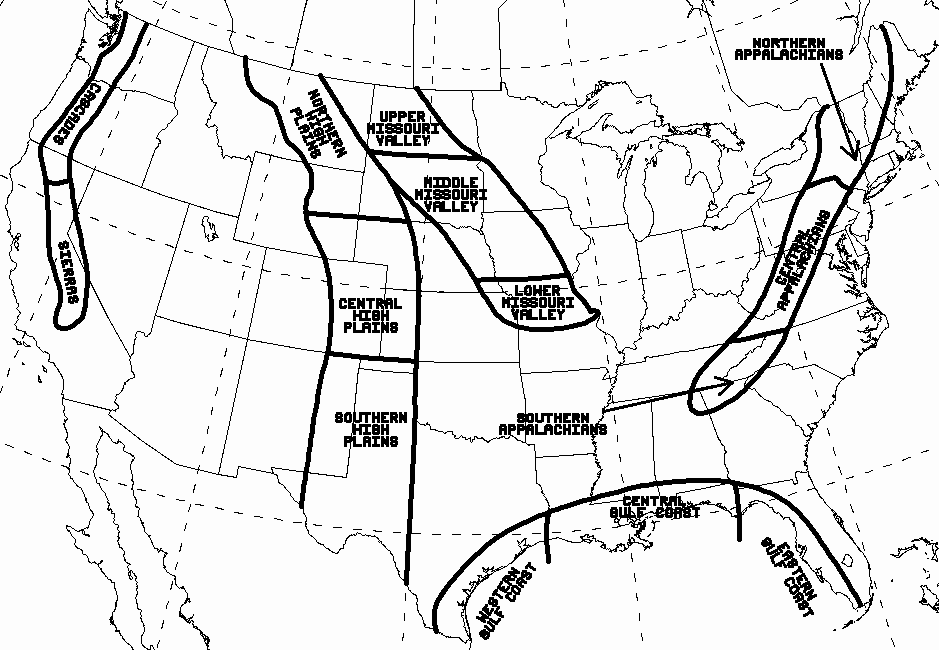
...Northern High Plains through the Great Lakes...
Days 1-3...
...Blizzard likely this weekend with widespread major impacts and
record-breaking snowfall for portions of the Upper Midwest and
Great Lakes...
Confidence continues to be high in a widespread major winter storm
from the Northern Plains through the Upper Midwest and Great Lakes
as a lee surface low lifts northeast and rapidly deepens into an
increasingly moist column. While it is this lee cyclone that will
be responsible for the most significant impacts, this event is
really two-pronged with the first event already ongoing across the
Northern High Plains.
Across the High Plains of Montana, moisture continues to stream
onshore within an impressive IVT plume (atmospheric river)
pushing well inland leading to a surge in PW/column moisture
across the northern Plains. The accompanying upper jet streak
arcing zonally across the region working in tandem with a surface
stationary front will cause snowfall to continue to spread ESE-
ward. Overall ascent during D1 across this area appears modest as
noted by omega fields and regional soundings, but the impressive PW
anomalies (nearing +2 sigma) will support periods of moderate
snowfall from MT through parts of SD. The heaviest accumulations
are likely in the higher terrain, with lower accumulations expected
elsewhere across the High Plains today. Where the heaviest snow
occurs, generally just east of the Continental Divide, WPC
probabilities are high (>70%) for at least an additional 4" of
snowfall through tonight, with more than 8" possible in the higher
elevations around the Little Belts.
The more significant portion of this event begins this afternoon
as lee cyclogenesis begins in more impressive fashion east of
CO/WY. A shortwave digging onshore the British Columbia coast
tonight will begin to amplify as it digs into the Central Rockies
Saturday night. The rapid amplification of this shortwave will
drive impressive height falls downstream, with impressive jet
streak intensification occurring as a result. The overlap of height
falls with this jet development will lead to a rapidly deepening
surface low tracking from CO to IA before 12Z Sunday.
After 00Z Sunday is when this event truly becomes a major winter
event with widespread considerable impacts. As the surface low
continues east from the Central Plains it will encounter dual
moisture streams, one from the decaying AR pushing east, and a
second as the theta-e ridge begins to arc northward on intensifying
WAA/southerly flow out of the Gulf. The overlap of robust deep
layer ascent with maximizing moisture return will deepen the low
substantially, and help expand a considerable precipitation shield,
with heavy snow arcing from SD through the Great Lakes by Sunday
morning, and then slowly pivoting northeast while continuing
through D3 as the surface low moves into Ontario by 00Z/Tuesday.
The synoptic setup is extremely favorable for a classic Midwest
winter storm with widespread intense snowfall. Embedded bands
with snowfall rates of 1-3"/hr are expected as reflected by high
potential for CSI and even CI in model cross-sections Sunday aftn
into Monday which drives intense omega into the TROWAL. Although
guidance has continued to trend north, there is high confidence in
a laterally translating band of heavy snow from SD into MN Sunday
morning, with the environment transiting into one that matches the
conceptual model for a pivoting band over eastern MN and WI Sunday
evening into Monday, It is in this area where the heaviest snowfall
is expected, and potentially record, or near-record 2-day snowfall
is possible from eastern MN through WI and northern MI. Elsewhere,
snowfall rates of 1"/hr or more are still likely at times, just
with lesser duration. These snowfall rates combined with gusty
winds reaching up to 60 mph will create blizzard and near-blizzard
conditions and whiteouts, with major to extreme impacts progged by
the recent WSSI-P. Even in areas that get lower snow totals, the
blowing snow potential will still result in difficult travel, and
it is likely that most forms of transportation will be treacherous
at best, and impossible at worst, through the event across a large
area from Montana to Michigan, and everywhere in between.
Event-total snowfall is likely to be extreme in some areas. This is
reflected by 72-hr WPC probabilities (ending 12Z Tuesday) that are
high (>70%) for at least 12" from the Coteau des Prairies of SD
eastward through the Twin Cities, across much of north-central WI,
and the entirety of the U.P. of MI. Where snowfall is most
prolific, likely in northern WI and the U.P of MI, WPC
probabilities indicate a 70-90+% chance of at least 24", and
localized totals of 3-4 feet are possible before this event ends.
This could result in record snowfall in some places, and with SLRs
being slightly below climo, combined with the strong winds, power
outages and long-lasting impacts are expected. For these reasons,
Winter storm key messages are in effect, and are linked below (Key
Message 1).
On the S/SE side of this snowfall swath, an axis of mixed
precipitation is likely, leading to icing accretion from central IA
through southeast WI and into lower MI. The most significant icing
is expected for lower MI where WPC probabilities for at least
0.25" of ice have climbed to over 50%, and the axis of higher
probabilities for at least 0.10" of ice have extended back into SE
WI.
As this system finally departs late D3, pronounced CAA on NW flow
in its wake could result in some lake effect snow in the favored NW
snow belts downstream of all the Great Lakes. WPC probabilities are
moderate (50%) for at least 4" of snow from LES in SW MI, as well
as along the Chautauqua Ridge and into the Tug Hill Plateau.
Additional heavy snow will occur near Marquette, MI as well, adding
onto the extreme snowfall event there the next few days.
...Cascades, Northern & Central Rockies...
Day 1...
The persistent atmospheric river (AR) which has plagued the Pacific
and Interior Northwest the past several days will finally come to
an end Saturday as the IVT plume weakens and sinks southward into
CA. This will be the result of the intensifying shortwave diving
out of British Columbia and pushing a surface low pressure east,
which will then trail its accompanying cold front southward into
the Great Basin. Much of of the available moisture will be focused
ahead of this front, so as the front digs south, the moisture will
follow, bringing a slow end to this impressive event. Strong
ascent will continue, at least the first half of the period, into
the Northern Rockies, with ascent expanding into the Central
Rockies as well, and this is where the heaviest snowfall is
expected before everything shifts into the middle of the country by
D2. Additional snowfall in the Cascades is expected to be minimal,
but WPC probabilities are high (>70%) for at least 6 additional
inches in the Absarokas, Tetons, and Wind Rivers, with locally more
than 12 inches possible in the higher elevations.
...Northeast...
Day 1...
The intense and compact low pressure over the Great Lakes tonight
will eject eastward with secondary cyclogenesis expected along the
coast of Maine Saturday morning. Although this low will become
dominant as it pivots into the Canadian Maritimes, an elongated
inverted trough extending west from this low will maintain ascent
across the Northeast much of Saturday.
Continued impressive WAA/theta-e advection into ME will manifest as
periods of heavy snow across that state, especially just northeast
of the surface low and up along the eastern half of the state.
This is where the heaviest snow rates are expected, and may exceed
1"/hr as suggested by HREF probabilities surpassing 70% across
eastern Maine. Here, WPC probabilities indicate a 50-90% chance of
4+ inches of snow today.
Farther west, NW flow along and behind the residual inverted trough
will leave periods of light to moderate snow across the interior
northeast, with local snowfall maxima occurring in favored upslope
terrain and across the Tug Hill Plateau where some lake enhancement
off Lake Ontario is expected. Snowfall inland may be less than
along the coast, but WPC probabilities indicate around a 70% chance
of 4+" of snow, highest across the Tug Hill Plateau and Green
Mountains of VT, before the system exits and snow ends by Sunday
morning.
Weiss
...Winter Storm Key Messages are in effect. Please see current
Key Messages below...
https://www.wpc.ncep.noaa.gov/key_messages/LatestKeyMessage_1.png