Probabilistic Heavy Snow and Icing Discussion
NWS Weather Prediction Center College Park MD
253 AM EDT Mon May 5 2025

Valid 12Z Mon May 05 2025 - 12Z Thu May 08 2025


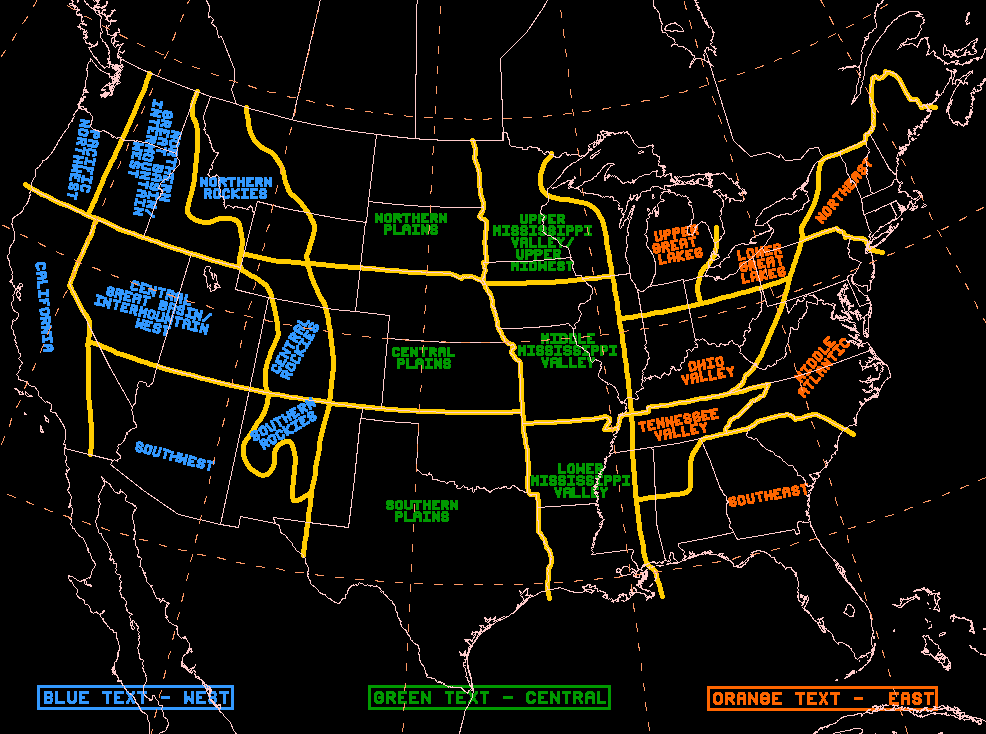
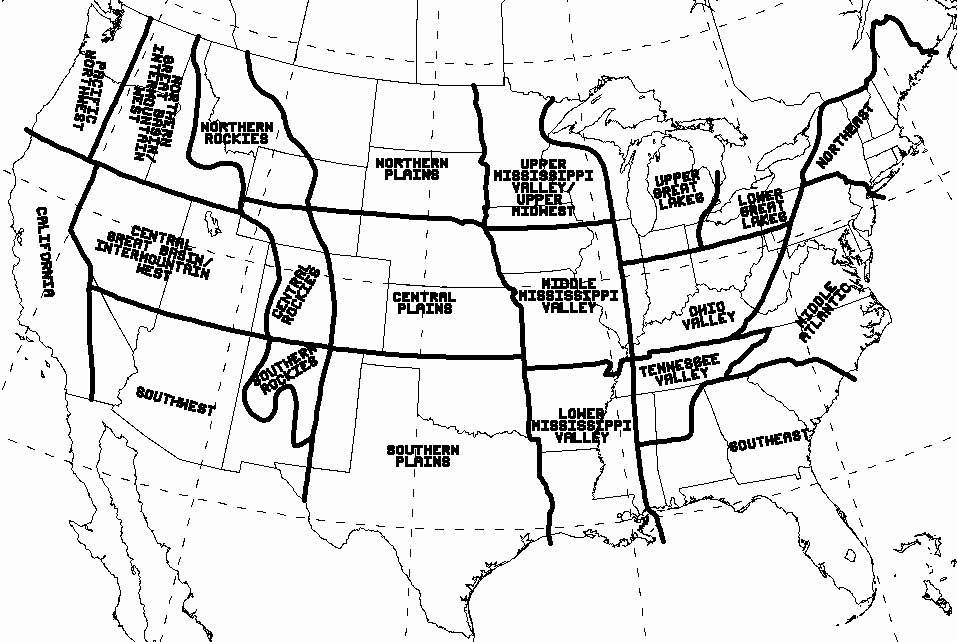
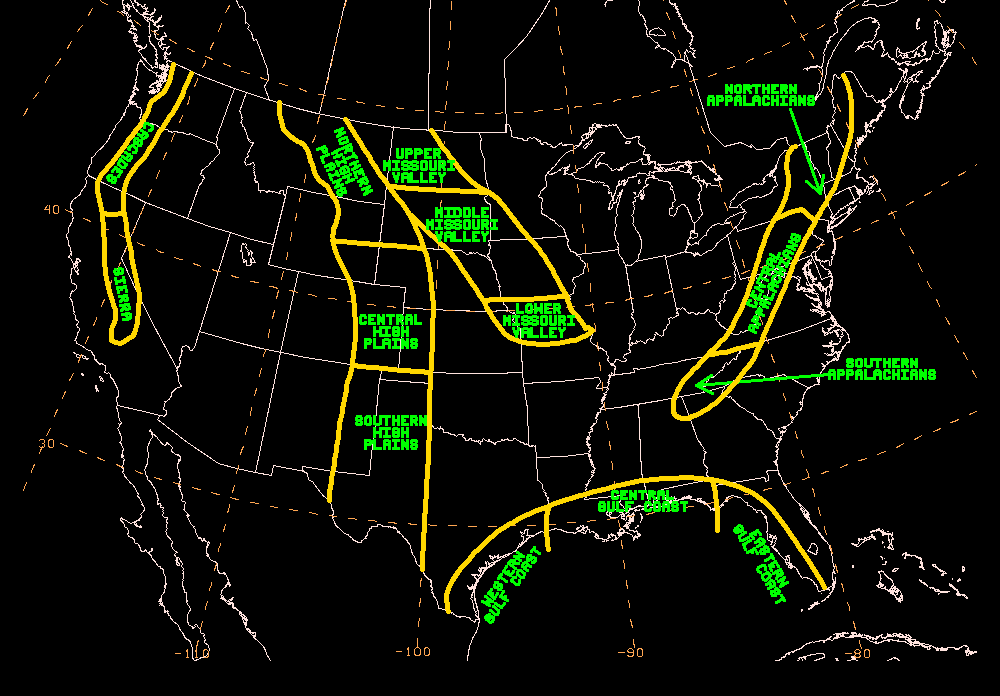
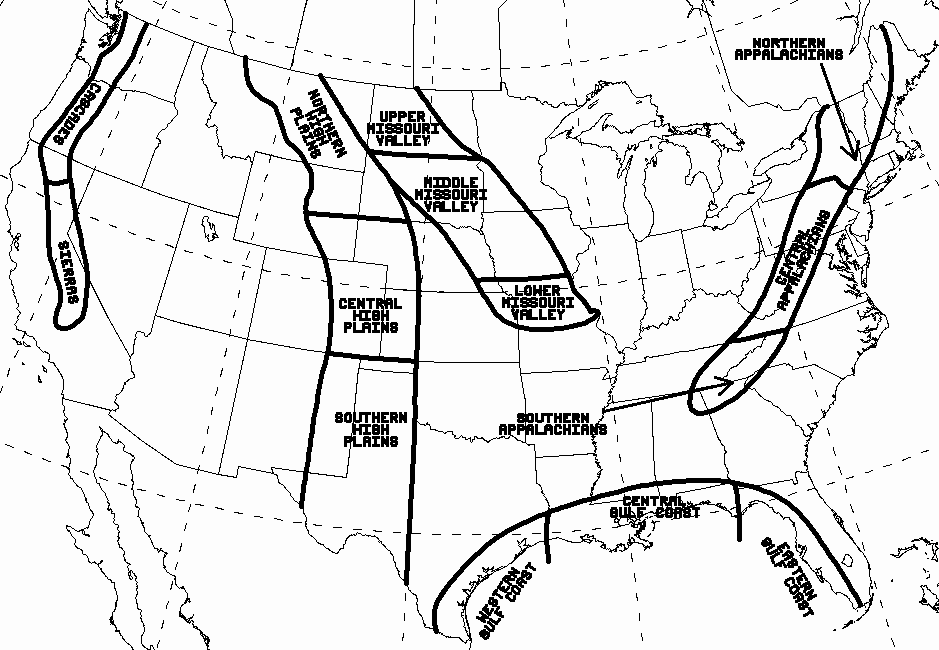
...Intermountain West...
Days 1-2...

The interaction of an anomalous and slow moving closed mid-level
low with a surface cold front wavering across the Central Rockies
will result in widespread heavy precipitation through Wednesday
before everything kicks out to the east during D3. The primary
mechanisms for ascent will be the intense closed low (500-700mb
height anomalies below the 1st percentile according to NAEFS) and a
cold front that will stall generally from the Dakotas across
Colorado and into the Great Basin. Intensifying and veering low to
mid level flow will encourage the impressive draw northward of
moisture, leading to robust isentropic ascent at 305K from the Gulf
into the Rockies on the downwind side of this feature. With
moisture confluence becoming impressive, ascent through height
falls and convergence along the front, aided by both strong upslope
flow (especially into the Sangre de Cristos and Front Range) and
elevated frontogenesis will wring out this moisture as expansive
and heavy precipitation from Montana through New Mexico.

Additionally, impressive easterly flow leading to the pronounced
upslope flow will correspond with some reduction (and isolated
folding) of the theta-e surfaces leading to some elevated
instability. This enhanced forcing combined with a lowering trend
in snow levels (NBM 10th% down to 7500 ft) could allow for more
impactful snow into lower elevations of the foothills, especially
across the Palmer Divide and Raton Mesa, including the I-25
corridor in that vicinity. After coordination with WFO BOU, opted
to raise SLRs a bit in this region for the potential, with some
impacts becoming more probable even east of the Front Range and
Sangres.

WPC probabilities across this area are high (>70%) for 6+ inches
both D1 and D2 in the San Juans, Sangre de Cristos, and Front
Range, with 1-2 feet of snow likely up around 9,000 ft, and locally
as much as 3+ feet above 10,000 ft. While accumulations in the
foothills and lower elevations down to 7,000 ft will be much less,
heavy snow rates with low-SLR could cause impacts even into the
I-25 corridor, especially Tuesday evening/night.

Farther north, snow levels will crash behind the cold front as it
sags southward, so while across WY and southern MT they too will
begin around 9,000 ft, by D2 snow levels are expected to fall to as
low as 6,000 ft, especially in MT and in the vicinity of
Yellowstone NP. Across this area, WPC probabilities are high
(70-90%) for 6+ inches D1 across the Absarokas and surrounding
elevations of southern MT, with probabilities reaching 50% across
the Wind Rivers, Big Horns, and in the vicinity of Yellowstone NP.

The probability of significant freezing rain across the CONUS is
less than 10%.


Weiss
 weather.gov