Extended Forecast Discussion
NWS Weather Prediction Center College Park MD
259 AM EDT Thu Jul 25 2024

Valid 12Z Sun Jul 28 2024 - 12Z Thu Aug 01 2024

...Hazardous heat to shift into and northeast of the central
Plains...
...Showers/storms with locally heavy rainfall possible over parts
of the eastern half of the lower 48...


...Overview...

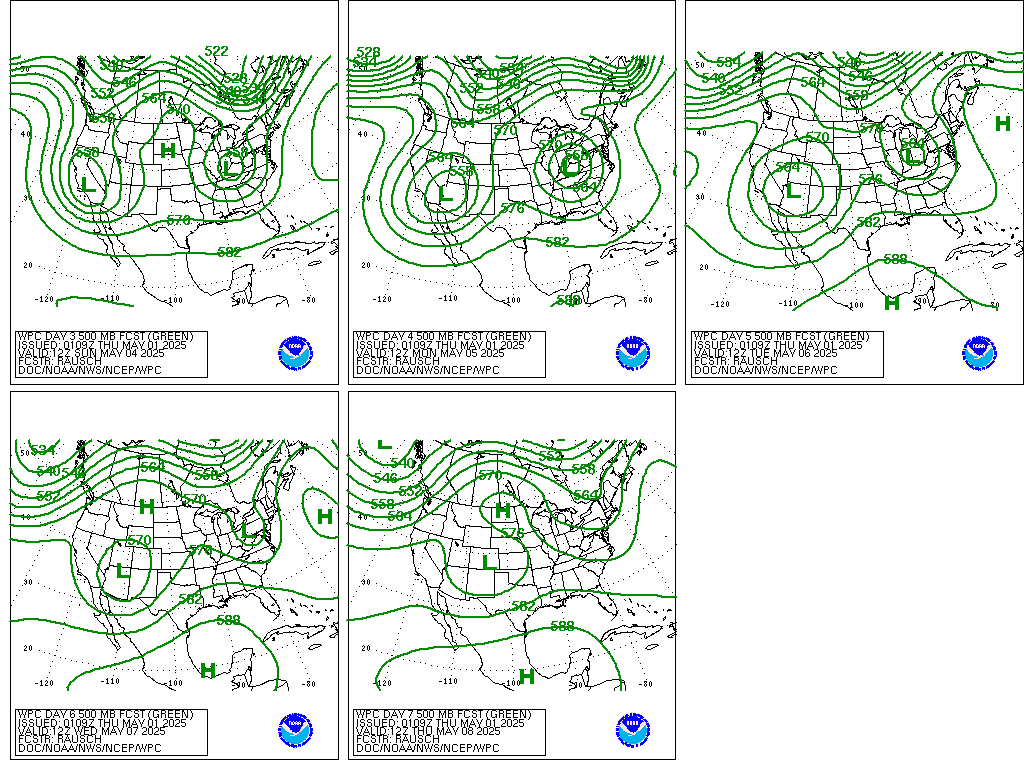
Guidance continues to show the pattern evolving toward a
strengthening southern Rockies/Plains upper ridge by the middle to
late part of next week as a retrograding Gulf Coast ridge merges
with the lingering ridge over the southern Rockies. The strong
ridging will set up what should be a prolonged period of hot
weather over many areas east of the Rockies, with the most
anomalous heat expected over the central Plains. Shortwave energy
ejecting from the Plains/Mississippi Valley Sunday onward, and then
mean troughing that develops over far eastern U.S., will support a
broad area of showers/thunderstorms drifting across the eastern
half of the country. Energy feeding into an initial mean trough
aloft over the Pacific Northwest coast should bring some rainfall
to the region early next week. This energy should eject eastward
mid-late week as larger scale troughing takes shape over the
northeastern Pacific.

...Guidance/Predictability Assessment...

The latest forecast update based on 12Z/18Z guidance started with
an operational model composite and then trended toward even weight
of the models/means by the end of the period next Thursday, albeit
with the 12Z ECMWF having less weight than the 18Z GFS or 12Z CMC
by that time.

Guidance is still working out the finer details of the complex
evolution over the eastern U.S./western Atlantic into the first
half of next week, as shortwave energy ejects from the
Plains/Mississippi Valley and a forming weak upper low just off
the East Coast may track into or near New England. An average
of latest machine learning (ML) models and dynamical guidance
provides a reasonable depiction of this evolution.

Around the northern periphery of the building Rockies/Plains upper
ridge (which has some modest spread for details with low
predictability several days out in time), there is some spread but
also improving clustering regarding shortwave details by the latter
half of the period. In particular, during Tuesday-Thursday the ML
models generally offer more support for the 18Z GFS/12Z CMC/12Z
ECens mean which show a better defined shortwave ejecting from the
Pacific Northwest than depicted by the 12Z ECMWF. Thus the latter
part of the forecast blend underweighted the 12Z ECMWF. The new 00Z
ECMWF shows a stronger depiction of this shortwave. Consensus
agrees that Northwest heights should rise after midweek as this
shortwave departs and larger scale troughing develops over the
northeastern Pacific.

...Weather/Hazards Highlights...

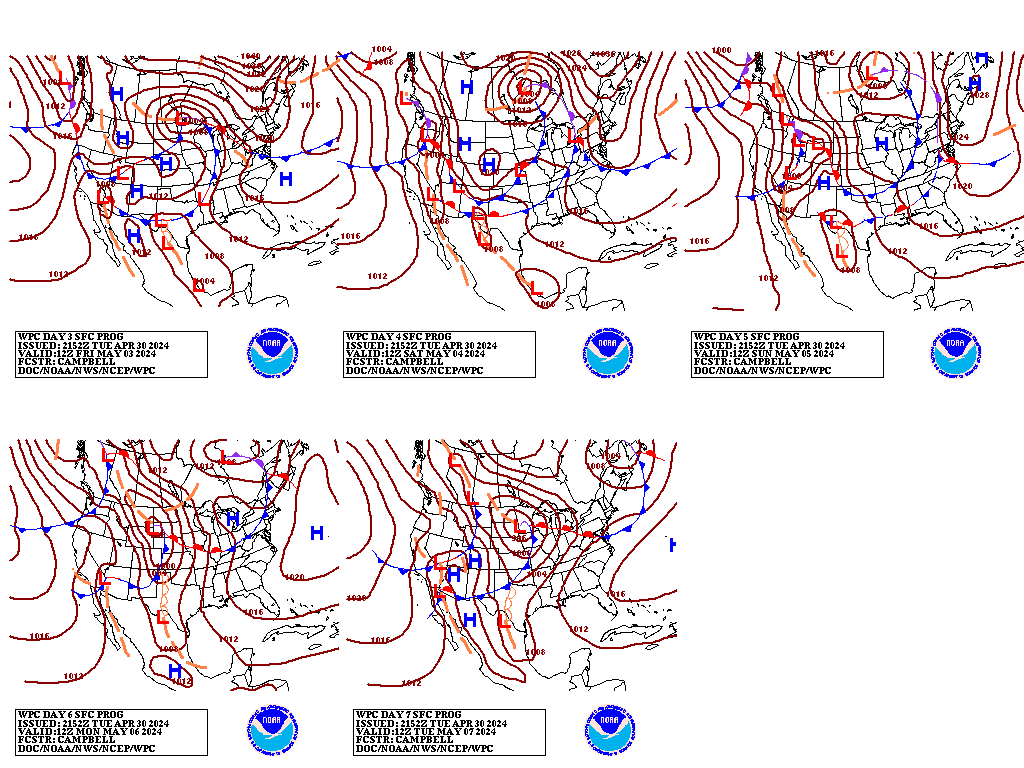
During the Sunday-Monday night period covered by the Days 4-5
Excessive Rainfall Outlooks, there will be a broad corridor of
above-climatology precipitable water values extending from the
Upper Midwest into the Southeast, with this moisture drifting
gradually eastward. On Day 4 the guidance suggests two relatively
greater areas of focus for heavy rainfall potential. One will be
over the Upper Midwest where shortwave energy and a wavy surface
front will interact with a moist and unstable environment, with the
other centered over/near the eastern two-thirds of Tennessee. Both
regions generally lean toward wet antecedent conditions. The
southern area exhibits a bit more overlap in the guidance, allowing
for introducing a Slight Risk (Level 2 of 4) area, while preference
is to await somewhat better agreement before introducing a Slight
Risk over the Upper Midwest. Note that locally heavy rainfall and
some flash flooding issues will be possible elsewhere within the
broad Marginal Risk area. This broad area of showers and
thunderstorms will drift eastward into Day 5, with guidance signals
not sufficiently coherent to support any Slight Risk areas within
the still broad Marginal Risk area. Elsewhere, lingering activity
over southern Texas merits a Marginal Risk on Day 4 with no change
in continuity while monsoonal activity and an associated Marginal
Risk on Days 4-5 will be confined to parts of Arizona/New Mexico.

Upper troughing aloft will tend to maintain an unsettled pattern
over the East after early Tuesday, with showers/storms possibly
becoming a little lighter and more scattered by Wednesday-
Thursday. Monsoonal convection over the West should stay confined
to southern areas through midweek, though it may eventually expand
a little northward depending on the shape of the southern
Rockies/Plains ridge and upper level energy rotating around its
western periphery. A frontal system approaching/reaching the
Pacific Northwest early in the week may produce a period of
rainfall, though currently with a fair amount of spread in the
guidance for intensity.

The forecast pattern evolution will support an expanding area of
hot weather over the Plains and to a lesser degree extending into
the Great Lakes and Northeast Sunday onward, possibly including
the Ohio Valley/Mid-Atlantic by next Thursday. The most persistent
and extreme high temperature anomalies should be over the central
Plains where some locations should see multiple days with highs
10-15F or so above normal. The Northeast could see some highs reach
10F or so above normal early in the week. The experimental
HeatRisk likewise reflects an expanding area of Moderate to Major
(Level 2-3 of 4) risks of heat-related impacts from the weekend
through next Wednesday, and even some pockets in the Extreme
category over the central U.S. by next week. Forecast temperature
anomalies would yield highs in the upper 90s to 100s over the
central Plains and upper 80s to 90 or so farther northeastward.
Climate Prediction Center forecasts indicate some variation of this
pattern may persist well beyond next Thursday. Much of the West
will likely see near to slightly below normal highs through the
first half of next week. Then gradual strengthening of the southern
Rockies upper ridge should begin to push temperatures somewhat
above normal by next Thursday. Lingering rainfall over the southern
tier should support near to below normal highs, especially over
southern/eastern Texas at the start of the week.

Rausch


Additional 3-7 Day Hazard information can be found on the WPC
medium
range hazards outlook chart at:
https://www.wpc.ncep.noaa.gov/threats/threats.php

WPC medium range 500mb heights, surface systems, weather grids,
quantitative precipitation forecast (QPF), excessive rainfall
outlook (ERO), winter weather outlook (WWO) probabilities, heat
indices, and Key Messages can be accessed from:

https://www.wpc.ncep.noaa.gov/medr/5dayfcst500_wbg.gif
https://www.wpc.ncep.noaa.gov/medr/5dayfcst_wbg_conus.gif
https://www.wpc.ncep.noaa.gov/5km_grids/5km_gridsbody.html
https://www.wpc.ncep.noaa.gov/qpf/day4-7.shtml
https://www.wpc.ncep.noaa.gov/#page=ero
https://www.wpc.ncep.noaa.gov/wwd/pwpf_d47/pwpf_medr.php?day=4
https://www.wpc.ncep.noaa.gov/heat_index.shtml
https://www.wpc.ncep.noaa.gov/#page=ovw
 weather.gov