Extended Forecast Discussion
NWS Weather Prediction Center College Park MD
259 AM EDT Wed Jul 2 2025

Valid 12Z Sat Jul 05 2025 - 12Z Wed Jul 09 2025


...Heavy Rain/Flash flooding threat for Florida as well as from
the north-central Plains to the Midwest this holiday weekend...

...Hazardous heat and humidity to spread from the Midwest this
holiday weekend to the Mid-Atlantic/Northeast early next week as
sweltering heat lingers for the South and builds over the West...


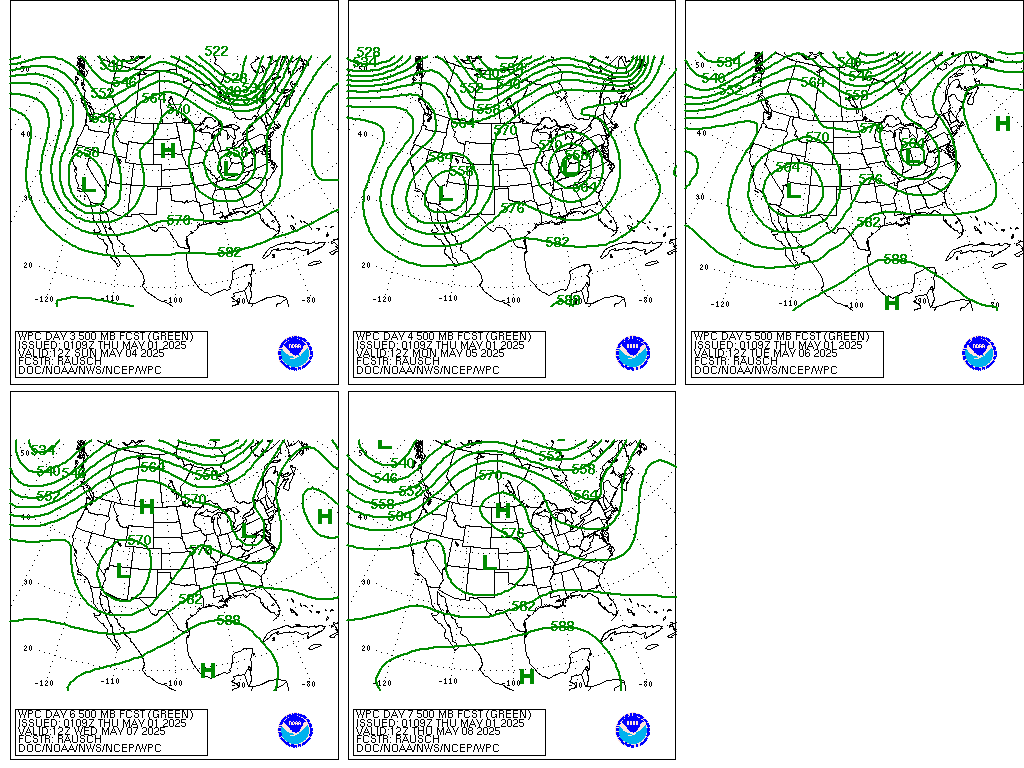
...Pattern Overview...

Upper troughing over the Northeast will eject into the Canadian
Maritimes over the holiday weekend as multiple Pacific shortwaves
dig into a West Coast mean upper trough which will help to keep it
in place heading into next week. In between, a building upper ridge
will spread a threat of hazardous heat and humidity from the
Midwest this holiday weekend to the Mid-Atlantic/Northeast early
next week as a hot summer airmass lingers over the South and builds
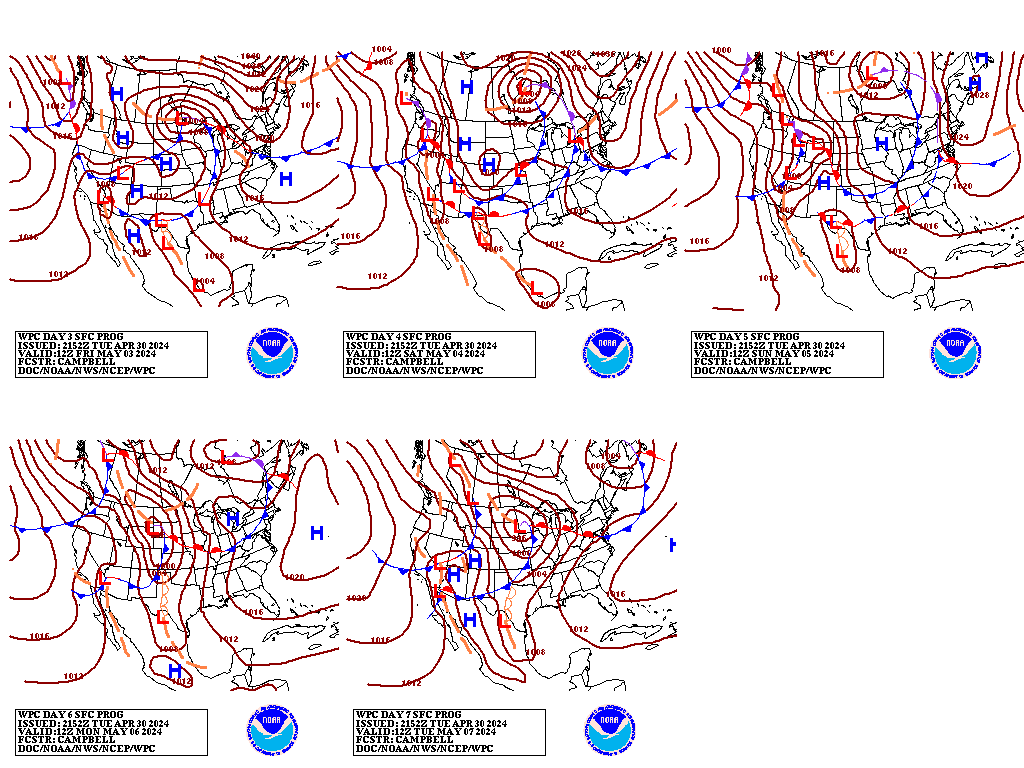
over the Southwest/West. Meanwhile, a series of strong to severe
convection forcing and heavy rain fueling impulses will progress
atop the ridge from the north-central U.S. to the Midwest and into
the Northeast. Meanwhile, tropical moisture will fuel some heavy
downpours along/south of a slowly weakening Florida front over the
weekend in a region with local precursor heavy rains and tropical
moisture, with any organization being monitorred by the NHC.

...Guidance/Predictability Assessment

The WPC medium range product suite was derived from a composite
blend of compatible GEFS/ECMWF/Canadian ensemble mean guidance
along with WPC coninuity and the National Blend of Models.
Forecast spread increases over time within average seasonal norms,
but ensemble mean usage mutes individual system depictions given
uncertainty, especially in the Gulf and offshore the Southeast
U.S. given slowly growing but limited NHC support. Recent model
have been less than stellar run to run with the handling of this,
but latest 00 UTC runs trended to the AIFS with main focus now
just offshore the Southeast coast this weekend/early next week.

...Weather/Hazards Highlights...

Tropical moisture and instability will support heavy convective
downpours along/south of a lingering front across Florida through
the upcoming holiday weekend. WPC Excessive Rainfall Outlook (ERO)
Marginal Risk areas are shown for Day 4/Saturday and Day 5/Sunday
for west-central Florida as preceded by heavy rainfall. Guidance
has varied QPF over Florida and uncertain onshore inflow solutions
into east-central Gulf and Southeast coastal areas as contingent
on tropical development potential the NHC continues to monitor.

Periodic strong to severe storms/MCS will offer periodic heavy
rain/runoff threats to focus from the north-central U.S. to the
Midwest this weekend as upper trough/impulse energies work on the
northern periphery of the main central U.S. upper ridge where
moisture/instability tends to be lifted near a wavy draping front.
WPC ERO Marginal Risk areas are depicted for Day 4/Saturday and
downstream for Day 5/Sunday. Into early-mid next week, showers and
embedded thunderstorms will focus near the slow moving front into
the Northeast/Mid-Atlantic, but also refire back across the north-
central states where ejecting upper-level waves will interact with
moisture and instability pooling frontal zones.

Meanwhile, a broadening upper ridge will spread a hazardous heat
and humidity threat from the Midwest this holiday weekend to the
Mid-Atlantic/Northeast into next week as a hot summer airmass
lingers broadly over the South and builds up across the West.


Schichtel


Additional 3-7 Day Hazard information can be found on the WPC
medium range hazards outlook chart at:
https://www.wpc.ncep.noaa.gov/threats/threats.php

WPC medium range 500mb heights, surface systems, weather grids,
quantitative precipitation forecast (QPF), excessive rainfall
outlook (ERO), winter weather outlook (WWO) probabilities, heat
indices, and Key Messages can be accessed from:

https://www.wpc.ncep.noaa.gov/medr/5dayfcst500_wbg.gif
https://www.wpc.ncep.noaa.gov/medr/5dayfcst_wbg_conus.gif
https://www.wpc.ncep.noaa.gov/5km_grids/5km_gridsbody.html
https://www.wpc.ncep.noaa.gov/qpf/day4-7.shtml
https://www.wpc.ncep.noaa.gov/#page=ero
https://www.wpc.ncep.noaa.gov/wwd/pwpf_d47/pwpf_medr.php?day=4
https://www.wpc.ncep.noaa.gov/heat_index.shtml
https://www.wpc.ncep.noaa.gov/#page=ovw
 weather.gov