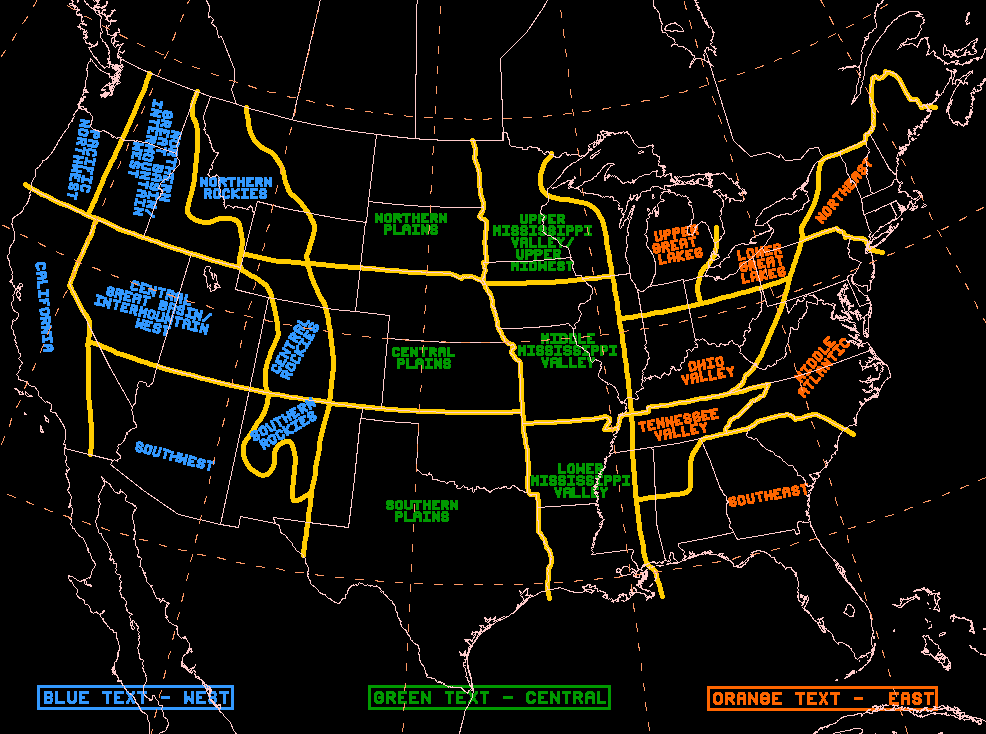
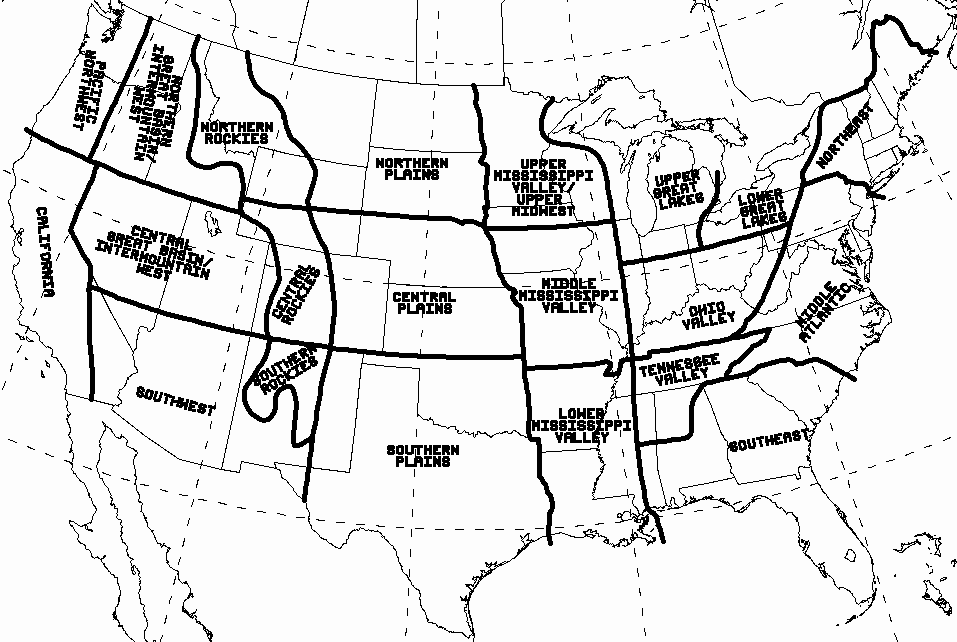
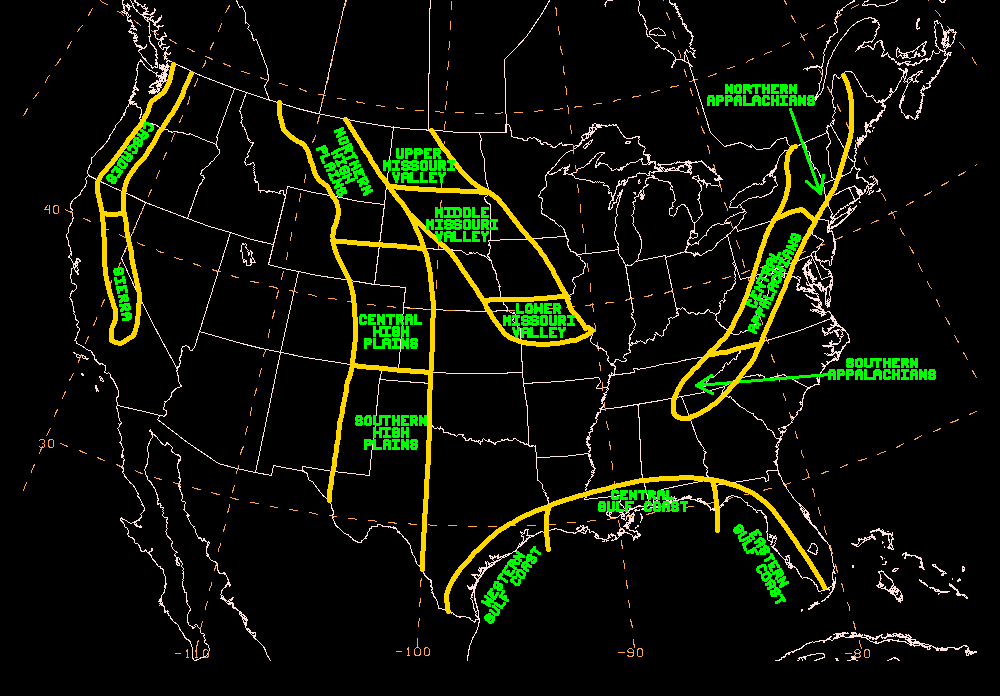
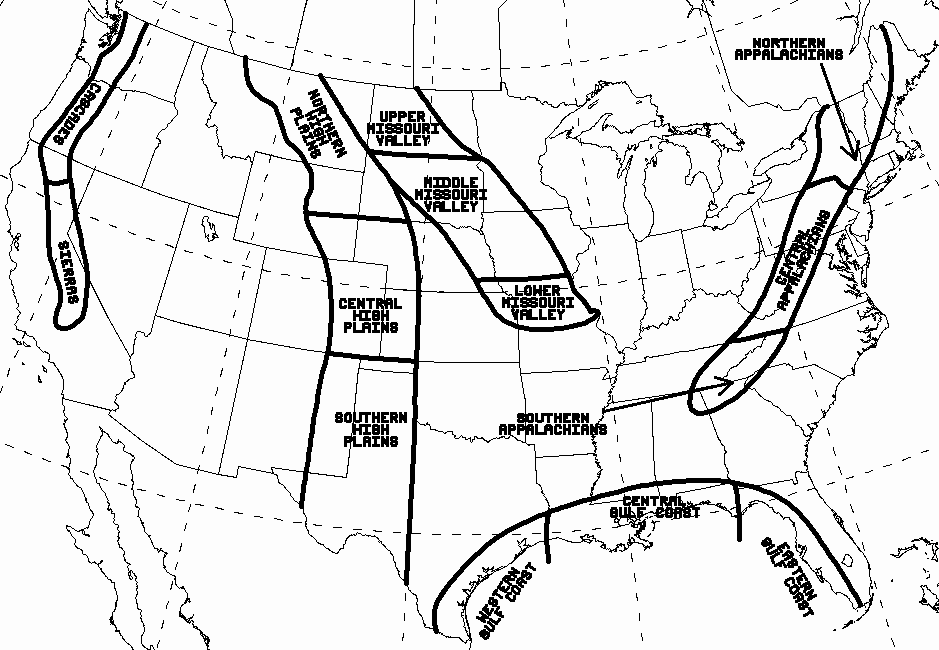
Short Range Forecast Discussion
NWS Weather Prediction Center College Park MD
300 PM EST Thu Dec 04 2025
Valid 00Z Fri Dec 05 2025 - 00Z Sun Dec 07 2025
...Active winter weather pattern continues with snow impacting the Great
Lakes, interior Northeast (this afternoon), Pacific Northwest/Rockies and
into the northern Plains through the next couple of days...
...Moderate to heavy rainfall for the Gulf Coast with isolated flash
flooding possible; some wintry precipitation expected north into the
Appalachians/Mid-Atlantic Friday...
...Surge of arctic air forecast to challenge low temperature records
across the northern Mid-Atlantic to New England Friday...
An active and snowy wintry weather pattern is forecast to continue across
the northern tier states and as far south as the Mid-Atlantic states
through the next couple of days. The first in a series of cold fronts is
currently bring snow showers and even brief periods of snow squalls from
the lower Great Lakes to interior New England this afternoon. Additional
cold fronts associated with arctic air intrusions are expected to bring
more rounds of snow from the northern Plains to the upper and central
Great Lakes on Friday and heading into the weekend. By Saturday, another
strong surge of arctic air from western Canada will begin to make its way
southeast into the northern U.S. This arctic surge will coincide with the
arrival of a plume of Pacific moisture and interaction with an upper-level
jet stream. This interaction will develop a low pressure wave along the
arctic front and bring an expanding area of snow, locally heavy, across
the northern Rockies early on Saturday. The snow will then move into the
northern Plains during the day on Saturday.
To the west, significant snowfall across the Cascades and ranges of the
northern Rockies today will spread into the central Rockies on Friday.
Winter Storm Watches have been issued for snowfall totals generally
between 8-14", with higher amounts upwards of 2-3' possible for the higher
mountain peaks. The mountain valleys will see between 3-6". While
accumulations should mainly remain limited to the mountains, a wintry mix
is expected for adjacent areas of the northern/central Great Basin and
northern High Plains, with rain for the Pacific Northwest. By Friday, the
snow should reach the Colorado Rockies before tapering off Friday night.
In the mean time, the aforementioned moisture plume from the Pacific will
bring a round of moderate to locally heavy rain to many locations across
Washington and Oregon before reaching Idaho, western Montana and Wyoming
as snow in the mountains and rain for the lower elevations. By Saturday,
the snow is expected to expand into the central Rockies. More than a foot
of new snow can be expected on Saturday near and around the higher
elevations of the northern Rockies.
Across the South, broad upper troughing interacting with a stationary
front along the Gulf Coast has led to the formation of a low pressure
system. An expanding area of precipiation with embedded thunderstorms
across central to eastern Gulf Coast region will move farther inland
tonight before redeveloping over the Southeast to the Florida Panhandle on
Friday. Some locally heavy rainfall will be possible with an isolated
threat for flash flooding. Farther inland, another expanding area of rain
across the Deep South is forecast to move into the Southeast and further
expand into the central Appalachians tonight and into the Mid-Atlantic on
Friday. With arctic air in place Friday morning, a period of light snow
is forecast to blanket portions of the central Appalachians to the
Mid-Atlantic region Friday morning. Winter Weather Advisories are in place
for potential snow accumulations of 1-2" as well as a light glazing of
ice. A low pressure system will quickly develop off the Carolina coast
Friday night and carry the snow out to sea with clearing skies on Saturday
for much of the East Coast. Some showers and embedded thunderstorms will
remain across the Southeast including the northern half of Florida as the
trailing front stalls.
Conditions remain well below average across much of the eastern and
central U.S. as this winter-like pattern remains in place. Yet another
cold front passage will bring some brutally cold low temperatures to
portions of the Midwest this morning, and then into the northern
Mid-Atlantic and New England Friday morning. Low temperatures in the
negative single digits and teens for the Midwest and single digits and
teens for the northern Mid-Atlantic/New England may challenge some daily
record low temperatures. Forecast highs the next couple days will vary
depending on the timing of frontal passages, but generally range in the
teens to 20s for the Midwest, the 20s and 30s for New England, the 30s and
40s for the central/southern Plains east through the Ohio Valley to the
Mid-Atlantic, and the 40s and 50s for Texas to the Southeast. The High
Plains will see a return to average if not a bit above average conditions
with downsloping winds off the Rockies in place, with highs into the 30s
and 40s north and 50s and 60s south. Conditions will also remain around or
above average for most of the West, with 40s for the interior, 50s and 60s
along the West Coast, and 60s and 70s for the Desert Southwest. The Four
Corners region will see some locally cooler temperatures with highs in the
30s and 40s.
Kong/Putnam
Graphics available at
https://www.wpc.ncep.noaa.gov/basicwx/basicwx_ndfd.php