Extended Forecast Discussion
NWS Weather Prediction Center College Park MD
224 PM EST Tue Dec 2 2025

Valid 12Z Fri Dec 05 2025 - 12Z Tue Dec 09 2025


...Overview...

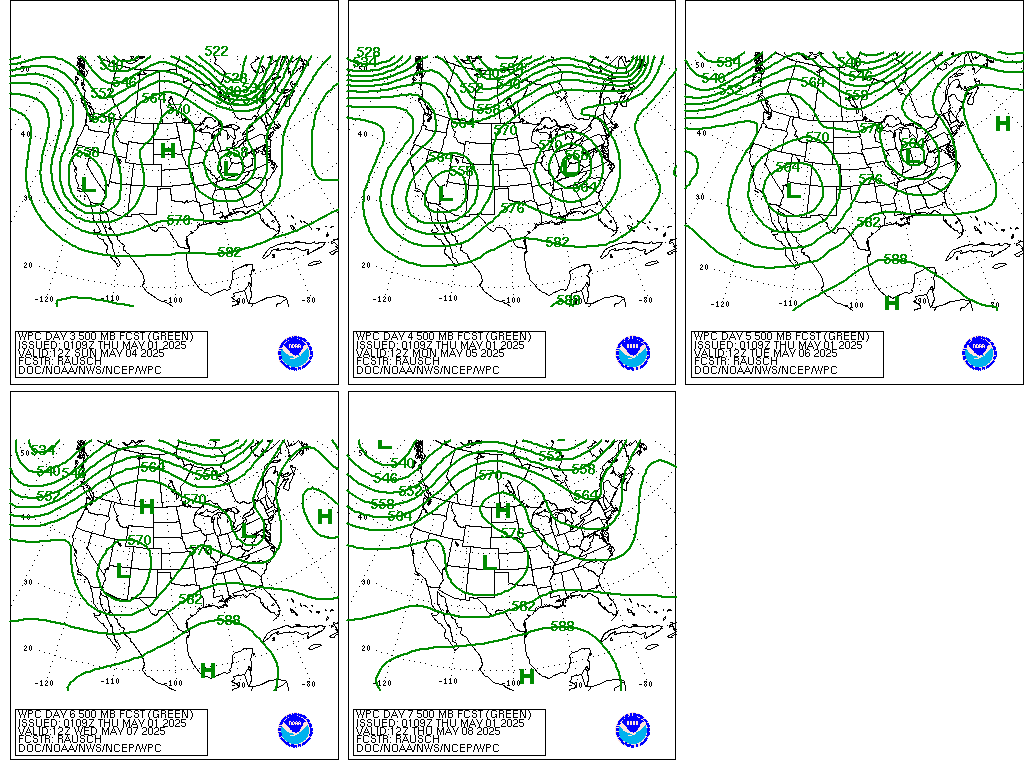
An east-central U.S. mean upper trough and broad cyclonic flow
will continue to dominate during much of the medium range period
across the CONUS as a result of upper lows anchoring over eastern
Canada and Alaska. This will favor below to well below normal
temperatures for the Plains to the East Coast. Near to above normal
temperatures are favored for the Western states under the
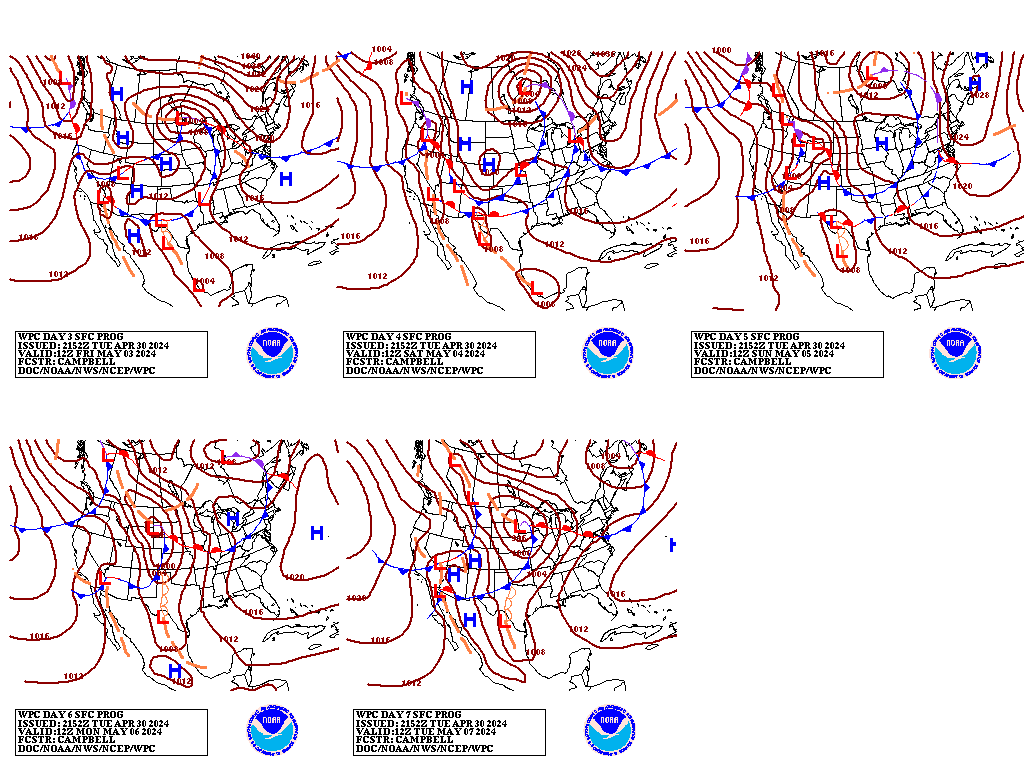
influence of upper ridging. A lingering frontal system over the
Southeast will likely promote an area of locally heavier rain
along the I-10 corridor. Some generally light wintry precipitation
is possible on its northern side. A couple of clipper systems will
impact the northern tier states as well through the period along
with a modest snow chances, but heavier coastal rains and terrain
enhanced snows may develop inland from the Pacific Northwest
through the northern Rockies early next week along with a threat
of high winds to monitor. CPC extends these threats into week 2.

...Guidance/Predictability Assessment...

Guidance continues to show good agreement synoptically through
medium-range time scales in a pattern with overall above normal
predictability. However, there remains quite a bit of uncertainty
in the details of the timing of a continued series of flow
embedded shortwaves and associated surface system reflections that
impact your local sensible weather grids, especially by later in
this forecast period. Accordingly, prefer a general model blend
for the first half of the period, with increasing weighting of the
ensemble means onward into Days 6 and 7. The 13 UTC NBM was a good
starting point for most of the sensible weather grids, but did
have to suppliment QPF with EC AIFS machine learning guidance to
increase coverage of light precipitation associated with systems
moving broadly through the U.S. northern tier states days 4-7.

...Weather/Hazards Highlights...

It generally remains the same that heavy rain along a frontal
boundary will spread into the Southeast Friday and possibly into
Saturday. The WPC Day 4/Friday ERO continues to show a Marginal
risk across parts of the Southeast along the frontal boundary which
may stall for a period of time allowing for some training of
storms. Instability may be lacking overall which should limit the
flash flood threat toward the I-10 corridor. By Saturday, some
moderate to heavy rain may linger across northern Florida and so a
marginal risk was raised on the Day 5/Saturday ERO for that area.
The whole system will lift out to sea by Sunday, but may still
spread some light precipitation (rain/snow) on its northern side
across the Mid-Atlantic and perhaps New England. Over the Pac NW,
several Pacific systems will push into western Canada during the
period with rain/snow over WA/OR and eastward to the
Northern/Central Rockies. This activity should be on the increase
along with the potential for terrain enhanced high winds next week.
Several clipper like systems will also bring some rain and snow to
parts of the Midwest, Great Lakes/Appalachains and the Northeast.


Santorelli/Schichtel


Additional 3-7 Day Hazard information can be found on the WPC
medium range hazards outlook chart at:
https://www.wpc.ncep.noaa.gov/threats/threats.php

WPC medium range 500mb heights, surface systems, weather grids,
quantitative precipitation forecast (QPF), excessive rainfall
outlook (ERO), winter weather outlook (WWO) probabilities, heat
indices, and Key Messages can be accessed from:

https://www.wpc.ncep.noaa.gov/medr/5dayfcst500_wbg.gif
https://www.wpc.ncep.noaa.gov/medr/5dayfcst_wbg_conus.gif
https://www.wpc.ncep.noaa.gov/5km_grids/5km_gridsbody.html
https://www.wpc.ncep.noaa.gov/qpf/day4-7.shtml
https://www.wpc.ncep.noaa.gov/#page=ero
https://www.wpc.ncep.noaa.gov/wwd/pwpf_d47/pwpf_medr.php?day=4
https://www.wpc.ncep.noaa.gov/heat_index.shtml
https://www.wpc.ncep.noaa.gov/#page=ovw
 weather.gov