Extended Forecast Discussion
NWS Weather Prediction Center College Park MD
256 PM EDT Sun Jul 6 2025

Valid 12Z Wed Jul 9 2025 - 12Z Sun Jul 13 2025

...Hazardous heat and humidity continues for parts of the East
while the heat builds over the West...

19Z Update: The 12Z model guidance starts off in excellent
agreement across the Continental U.S. on Wednesday, with a multi-
deterministic model blend as a starting point in the forecast
process. This general philosophy holds true going into Thursday as
well, and models have trended towards a stronger shortwave trough
and potential closed low over the Dakotas and Minnesota to close
out the work week. The 00Z CMC was more out of line with the model
consensus at the time of fronts/pressures preparation, but the new
12Z run is better. Model differences become more pronounced across
southern Canada going into next weekend, and the ECMWF becomes
stronger with an upper ridge near the Pacific Northwest coast by
Sunday. The ensemble means were gradually increased to about half
by this time. The previous forecast discussion is appended below
for reference. /Hamrick
------------------

...Pattern Overview...

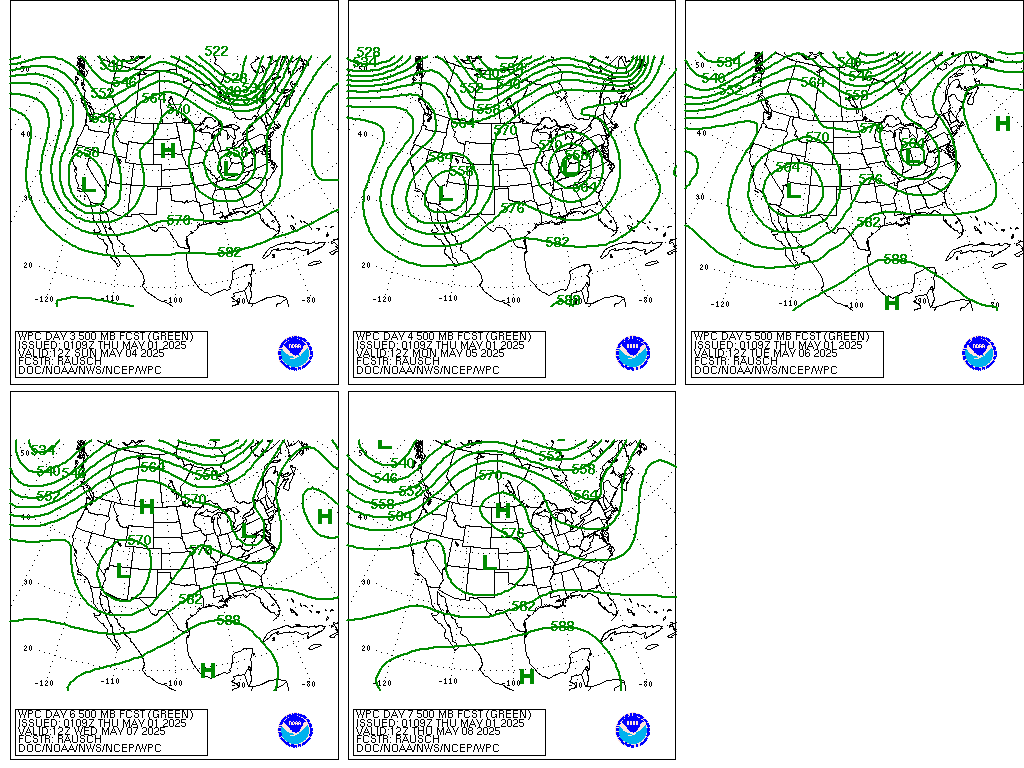
The large scale pattern will transition from being quasi-zonal to
having an upper ridge over the West/Southwest with troughing over
the Great Lakes into the Northeast. This change will be bolstering
widespread heat across the Southwestern states. A low pressure
system will advance through the northern/central states toward the
Northeast and will be the focus for scattered showers and
thunderstorms.

...Guidance/Predictability Assessment

The latest guidance has above average confidence for hazardous
heat with the upper ridge building over the west and for multiple
impulses to track through the flow as troughing sets up over the
Northeast. The main feature tracking from the eastern Pacific to
the Northeast remains faster with the GFS/GEFS mean whereas the CMC
is deeper with the closed low/trough exiting the Dakotas. The
spread was still acceptable however weighting of those solutions
were reduced later in the extended period. WPC utilized a
combination of the OOZ ECMWF/GFS/Canadian/UKMET/ECMWF ensemble
mean/GEFS mean, continuity and the NBM.

...Weather/Hazards Highlights...

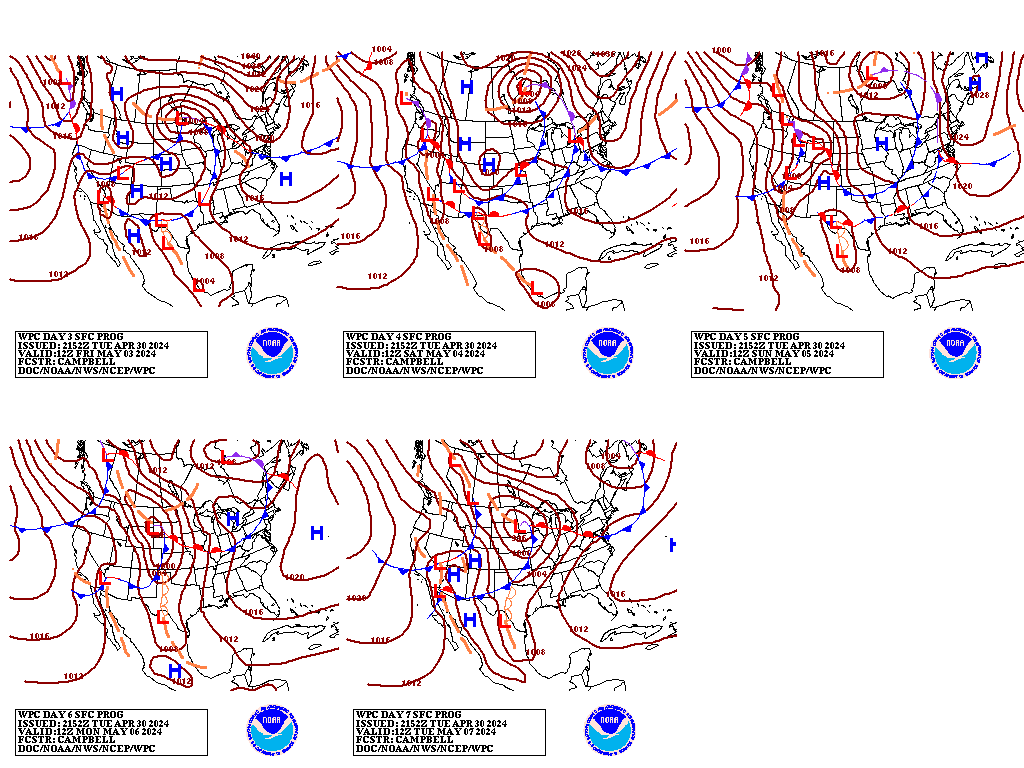
Showers and thunderstorms are expected to be focused in proximity
to progressive cold fronts, stalled boundaries and round the upper
high in the Southern Rockies. The wavy front into the eastern U.S.
may be a focus for heavier rain and thunderstorms. This includes
areas from the Corn Belt into the Midwest and Ohio Valley,
Appalachians, Mid-Atlantic, and Northeast. There are Marginal Risks
in place (level 1 of 4) for the ArkLaTex region on Day 4, for parts
of the Dakotas and Upper Midwest on Day 5, and for portions of the
Mid-Atlantic into North Carolina and the southern Appalachians for
both days 4 and 5 for an axis of heavier rainfall that is likely
south of a frontal boundary.

Many locations will have daily maximums climbing well into the
100s at lower elevations across the Southwest and mainly dry
conditions, except for perhaps far southeastern Arizona into New
Mexico where some monsoonal moisture may be present. Experimental
HeatRisk values may rise to Major or Extreme levels (3 out of 4 or
4 out of 4) from the California deserts into southern Nevada, Utah,
and Arizona. Extreme Heat Watches have been raised for parts of
Arizona through at least Thursday.


Campbell

Additional 3-7 Day Hazard information can be found on the WPC
medium range hazards outlook chart at:
https://www.wpc.ncep.noaa.gov/threats/threats.php

WPC medium range 500mb heights, surface systems, weather grids,
quantitative precipitation forecast (QPF), excessive rainfall
outlook (ERO), winter weather outlook (WWO) probabilities, heat
indices, and Key Messages can be accessed from:

https://www.wpc.ncep.noaa.gov/medr/5dayfcst500_wbg.gif
https://www.wpc.ncep.noaa.gov/medr/5dayfcst_wbg_conus.gif
https://www.wpc.ncep.noaa.gov/5km_grids/5km_gridsbody.html
https://www.wpc.ncep.noaa.gov/qpf/day4-7.shtml
https://www.wpc.ncep.noaa.gov/#page=ero
https://www.wpc.ncep.noaa.gov/wwd/pwpf_d47/pwpf_medr.php?day=4
https://www.wpc.ncep.noaa.gov/heat_index.shtml
https://www.wpc.ncep.noaa.gov/#page=ovw
 weather.gov