Extended Forecast Discussion
NWS Weather Prediction Center College Park MD
253 PM EDT Mon Jul 22 2024

Valid 12Z Thu Jul 25 2024 - 12Z Mon Jul 29 2024

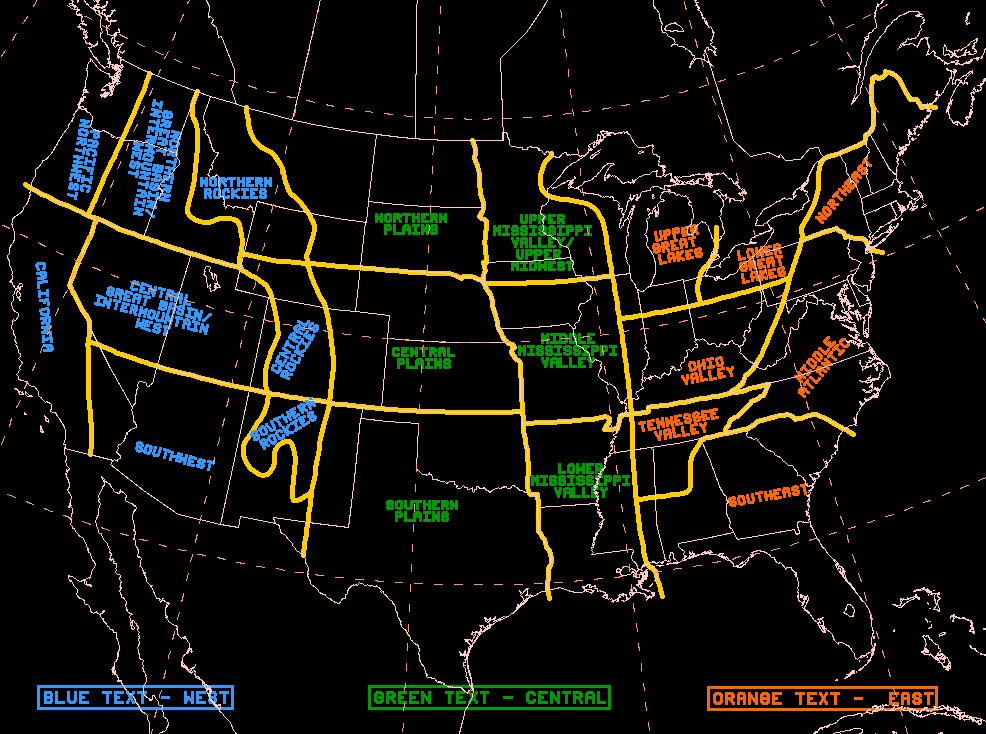
...Western U.S. heat to shift into the northern High Plains...
...Showers/storms with locally heavy rainfall expected over the
Four Corners and from the western Gulf Coast into parts of the
East...


...Overview...

Guidance continues to show an evolution toward a more average
summertime pattern with flatter flow setting up over the northern
tier U.S. underneath and in the wake of an upper low tracking
across southern Canada, while moderate mean troughing lingers near
the West Coast. Farther east, there is initially good agreement
with an upper trough progressing eastward from the Great Lakes
(with a leading cold front). However disagreements arise regarding
residual trough energy near or offshore the East Coast, as well as
for what becomes of energy within an upper weakness over the Plains
late this week into the weekend. Initial western ridging should
weaken somewhat but linger over the Four Corners, while upper
ridging over the Southeast/Gulf coast should oscillate in strength
during the period. The forecast pattern will likely favor highest
rainfall totals from the western Gulf Coast into the southern Mid-
Atlantic as well as multiple days of locally heavy monsoonal
convection over and near the Four Corners states.

...Guidance/Predictability Assessment...

A relatively stagnant pattern, common for the summer, will see very
little in the way of guidance variability during the medium range
period beginning this weekend. A general model blend consisting of
the 00z EC/UKMET/CMC and 06z GFS were used for days 3 and 4. The
00z ECE and 06z GEFS were introduced to the blend on day 5. The
UKMET was dropped from the blend on day 6 and replaced by the 00z
CMCE. The day 7 blend consisted of the 00z ECE/CMCE/EC and 06z
GEFS. There were some small height differences in the Southern
Plains after day 5 where two mid-level ridges potentially merge
into one. Troughing of a mid-level low propagating across the
northern tier states is captured fairly well by the deterministic
then ensemble mean guidance through the end of the period. There
isn't much in the way of QPF spread from the Carolinas down to the
Gulf Coast as well.


...Weather/Hazards Highlights...

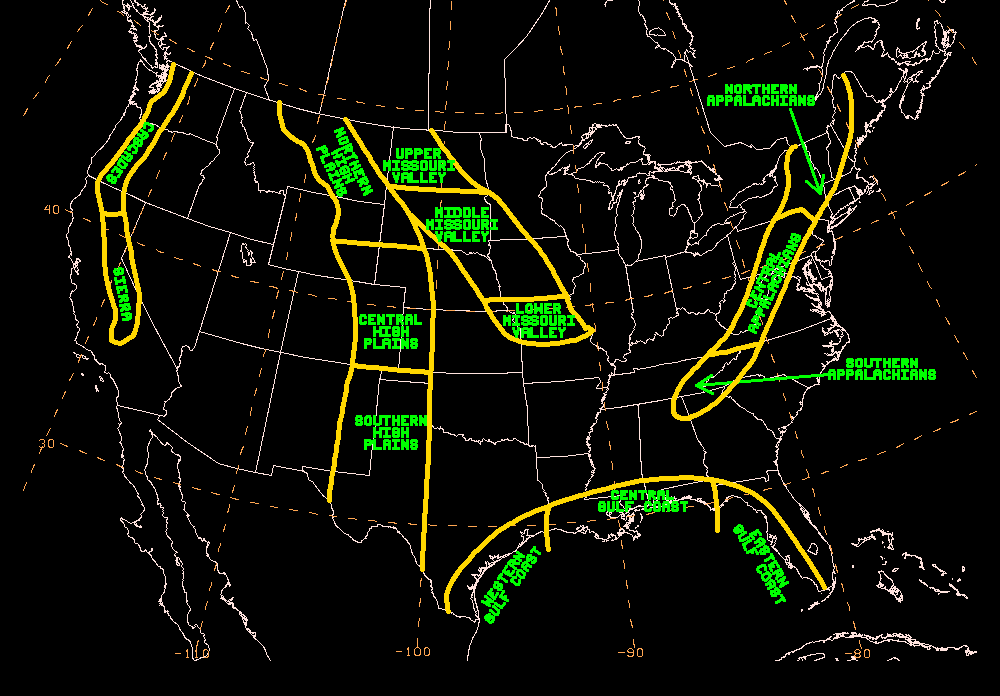
Expect episodes of locally heavy rainfall during the latter half of
the week within a broad corridor of enhanced moisture from
southern/eastern Texas to parts of the East Coast. On Thursday, the
best composite of guidance highlights the region from far southern
Virginia through the Carolinas into northern Georgia/southern
Appalachians for heaviest rainfall potential. These locations will
also have wet ground conditions from recent/forecast rainfall. Thus
the Day 4 Excessive Rainfall Outlook depicts a Slight Risk area
across this region, representing a southwestward expansion from
continuity. Within the broad surrounding Marginal Risk area
covering the South and East, the western Gulf Coast region looks to
be another area of somewhat higher potential for locally heavy
rainfall but with a more diffuse guidance signal at this time
precluding a Slight Risk for the time being. Activity over the
Northeast in association with an upper trough/cold front appears to
represent the lower end of the Marginal Risk range. Southeastward
progression of the cold front over the East should suppress the
moisture axis near the East Coast by Friday, yielding a band of
Marginal Risk from southern/eastern Texas through most of the
Carolinas in the Day 5 ERO. The latter region would be on the
higher end of that range, with just a little better guidance
clustering meriting a Slight Risk area. Beyond early Saturday,
northward extent of rainfall over the East becomes increasingly
uncertain due to guidance differences in important details aloft.

Monsoonal moisture will continue to support episodes of diurnally
favored convection over the Four Corners region into the Great
Basin, with some shifting of coverage over the course of the period
based on pattern evolution. Instances of flash flooding will be
possible, especially near steep terrain and burn scars. The Day 4
Excessive Rainfall Outlook valid on Thursday maintains continuity
with a Marginal Risk area covering parts of the southern Rockies
into the Great Basin, while portions of the Marginal Risk area in
the Day 5 ERO shift a bit eastward in concert with progression of
highest moisture anomalies and best instability. Embedded Slight
Risk upgrades appear likely at some point in future cycles, with
specifics depending on how guidance clusters relative to each other
and with sensitive burn scar areas/regions with wettest ground
conditions. By late week onward, some of this moisture may interact
with the front progressing across the northern Plains to produce
some areas of focused rainfall.

Expect the hazardous heat over the West during the short term to
moderate/decrease in coverage late this week while a separate area
of hot temperatures will settle over northern half of the Plains.
Parts of California and the Southwest may see highs up to 5-10F
above normal Thursday-Friday along with the experimental HeatRisk
index showing scattered areas of at least major risk of heat-
related impacts especially on Thursday. Meanwhile, the northern
High Plains should also see the most extreme heat on Thursday with
highs 10-20F above normal (with a few daily records possible) and
broad coverage of the major category in HeatRisk. After Thursday
expect the heat to shift a little east/southeast over the northern
half of the Plains and persist into early next week (plus 5-10F and
locally higher anomalies). Very warm temperatures may also spread
into the Great Lakes and Northeast by Sunday-Monday. In contrast,
the generally wet pattern over the South and vicinity will tend to
keep highs below normal from southern/eastern Texas into the
southern Mid-Atlantic late this week into the weekend. Coolest
anomalies with greatest persistence should be over Texas.

Kebede/Rausch


Additional 3-7 Day Hazard information can be found on the WPC
medium
range hazards outlook chart at:
https://www.wpc.ncep.noaa.gov/threats/threats.php

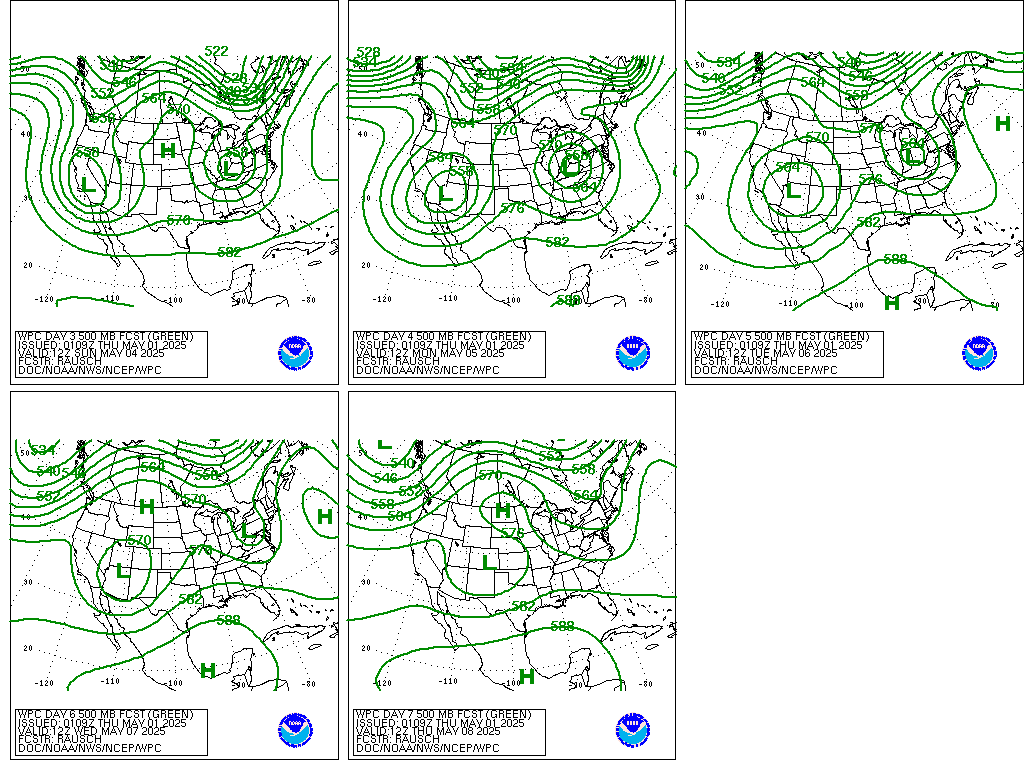
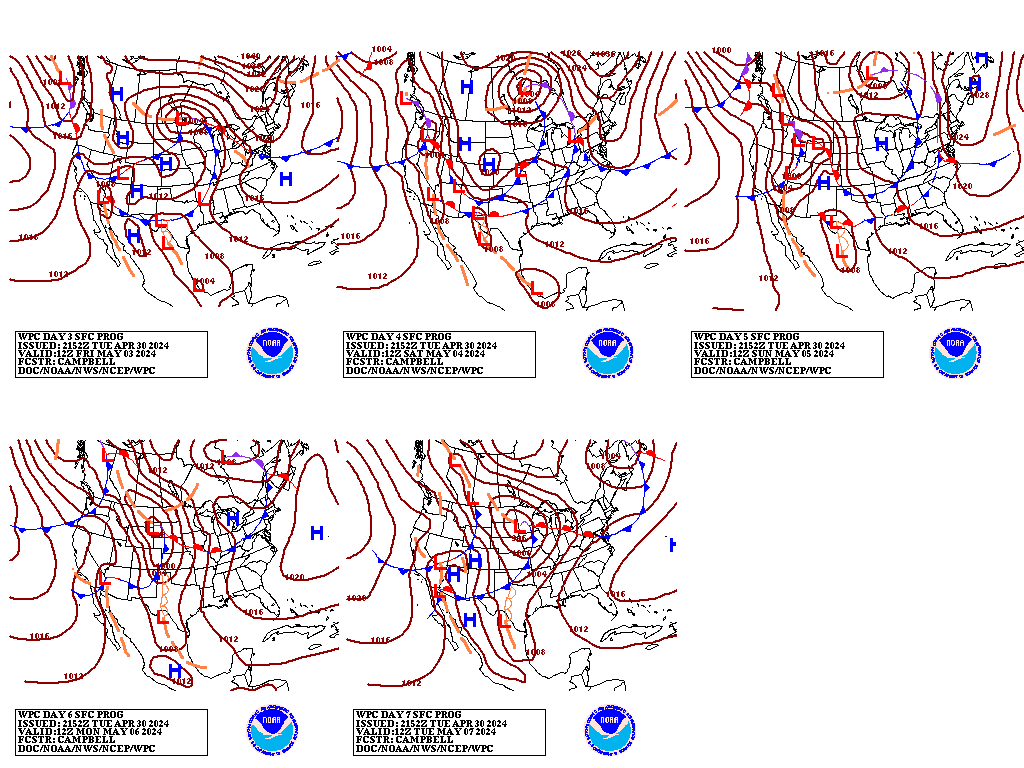
WPC medium range 500mb heights, surface systems, weather grids,
quantitative precipitation forecast (QPF), excessive rainfall
outlook (ERO), winter weather outlook (WWO) probabilities, heat
indices, and Key Messages can be accessed from:

https://www.wpc.ncep.noaa.gov/medr/5dayfcst500_wbg.gif
https://www.wpc.ncep.noaa.gov/medr/5dayfcst_wbg_conus.gif
https://www.wpc.ncep.noaa.gov/5km_grids/5km_gridsbody.html
https://www.wpc.ncep.noaa.gov/qpf/day4-7.shtml
https://www.wpc.ncep.noaa.gov/#page=ero
https://www.wpc.ncep.noaa.gov/wwd/pwpf_d47/pwpf_medr.php?day=4
https://www.wpc.ncep.noaa.gov/heat_index.shtml
https://www.wpc.ncep.noaa.gov/#page=ovw
 weather.gov