Short Range Forecast Discussion
NWS Weather Prediction Center College Park MD
300 PM EST Fri Feb 27 2026

Valid 00Z Sat Feb 28 2026 - 00Z Mon Mar 02 2026

...Record warmth across the Southwest including Los Angeles as arctic air
surges across the norther tier states...

...Light snow will move quickly across the northern tier states before
wintry precipitation develops over the central Plains on Sunday...

...Showers and thunderstorms will move off the Southeast U.S. coast
tonight but they will linger into the weekend for the Sunshine State...

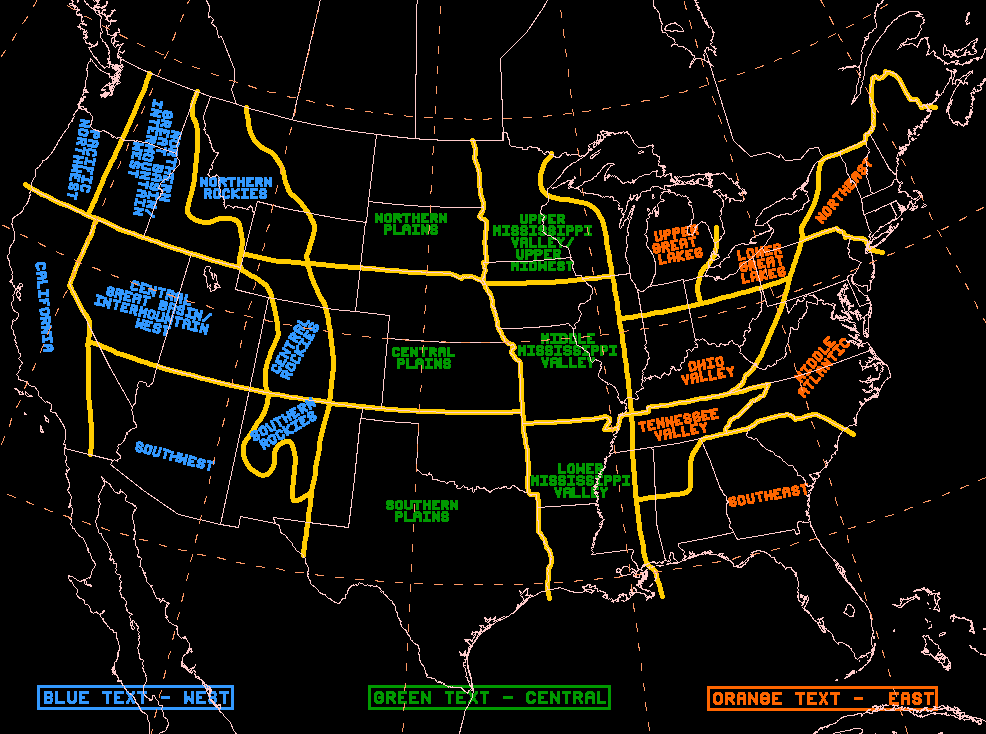
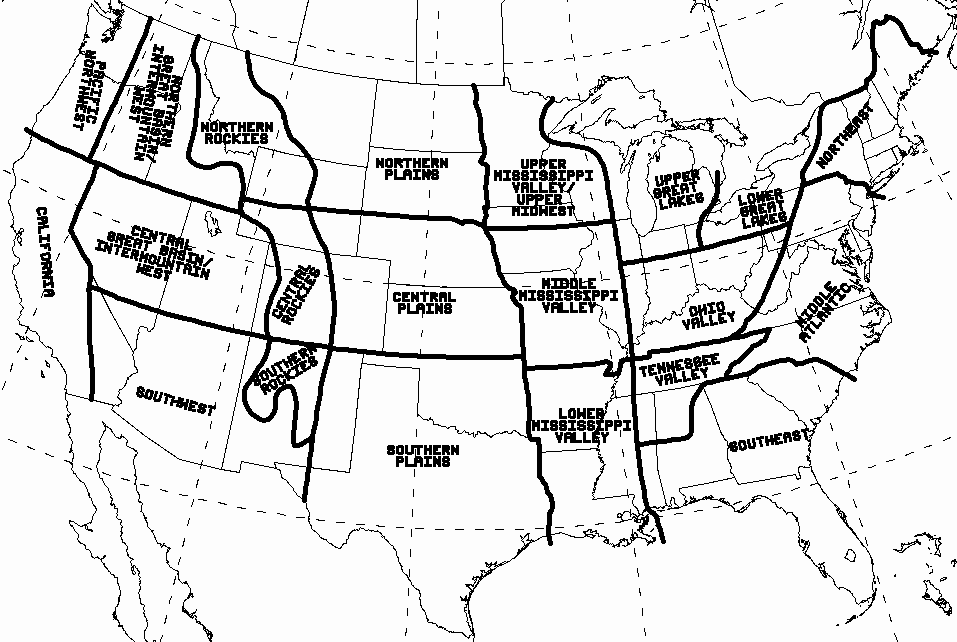
The weather pattern across the U.S. will support a large contrast in
temperatures across the U.S. as a warm ridge of high pressure will keep
well above normal temperatures in the Southwest while an outbreak of
arctic air will surge across the northern tier states.  In fact, record
breaking temperatures topping near 100 degrees are forecast near the
southern border of the Desert Southwest Saturday afternoon under the
ridge, including high temperatures well up into the 80s for Los Angeles.
Temperatures will begin to moderate on Sunday but they will remain at
record high levels Sunday afternoon across the Southwest.  Meanwhile, an
outbreak of arctic air currently reaching into the northern Plains will
surge east across the northern tier states while spreading farther south
into the central Plains over the weekend.  A swath of light to locally
moderate snow will move quickly across the northern tier states from west
to east through the next couple of days reaching New England on Sunday
well behind the arctic front.  By Sunday afternoon, wintry precipitation
is forecast to emerge over the central Plains as an upper-level shortwave
ejecting out of the central Rockies begins to interact with the arctic
front.  Meanwhile, rain is forecast farther south across the south-central
Plains.

Across the Southeast, a frontal system with multiple low pressure waves
will gradually slide east into the Atlantic tonight.  Showers and
thunderstorms behind the system will be moving off the Southeast U.S. into
the Atlantic but the trailing portion of the front will take additional
time to move through the Florida peninsula, keeping the chance of showers
and thunderstorms into the weekend for this portion of the Sunshine State.
 For the West Coast, an upper-level trough moving onshore will produce
scattered rain and rain showers from northern California to the Great
Basin during the weekend.

Kong


Graphics available at
https://www.wpc.ncep.noaa.gov/basicwx/basicwx_ndfd.php
 weather.gov