Short Range Forecast Discussion
NWS Weather Prediction Center College Park MD
341 PM EDT Thu Jul 25 2024

Valid 00Z Fri Jul 26 2024 - 00Z Sun Jul 28 2024

...Excessive Rainfall is forecast for the Texas coast through tonight with
more scattered showers and thunderstorms across the southern tier states
to the East Coast...

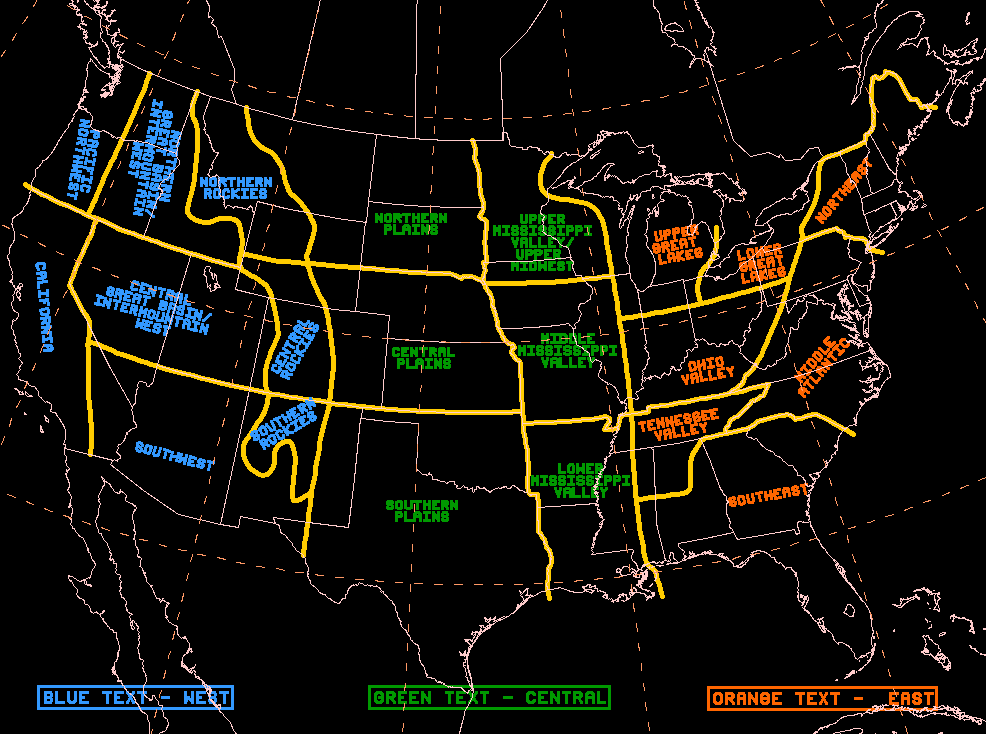
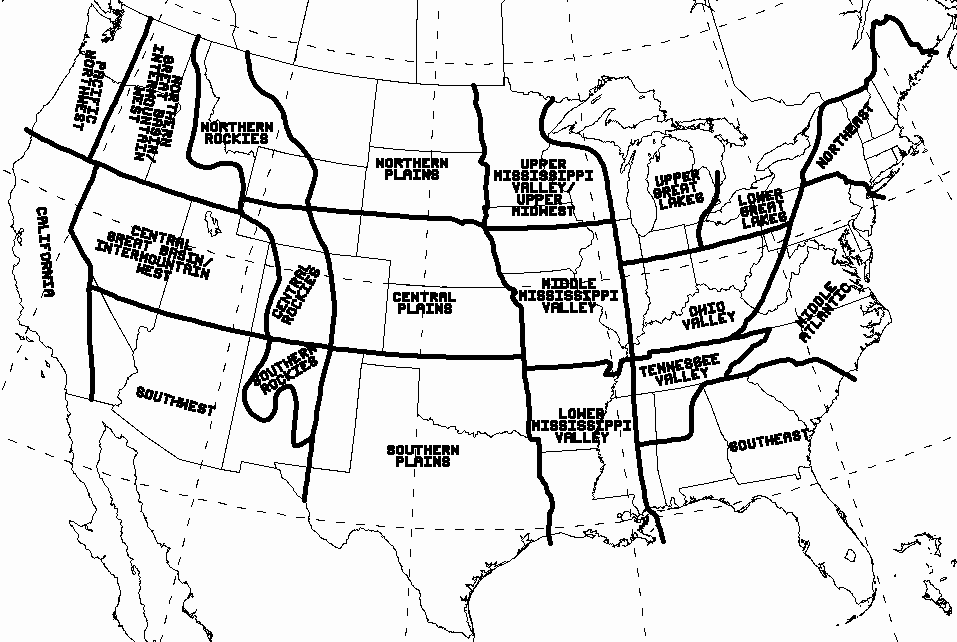
...Monsoonal thunderstorms continue across the Great Basin and into the
Four Corners region with threats of localized flash flooding...


A slow-to-evolve summertime weather pattern will continue across much of
the U.S. mainland while a more progressive Pacific cold front sweeps
across the northwestern part of the country over the next couple of days.
Under this pattern, unsettled weather and relatively cool temperatures for
July will continue across the South as well as the Great Lakes. The
stronger forcing associated with the Pacific front will push the heat dome
into the northern High Plains tonight beneath a warm front, resulting in
another evening of major to locally extreme Heat Risk for the region. Low
temperatures will once again reach well into the 70s with little to no
rainfall expected.  Meanwhile, the heat will continue to become less
intense over the Central Valley of California and the Desert Southwest
until almost completely diminishing for the region by the weekend.  Some
of the hot air over the northern Plains will be pushed into the upper
Midwest by the weekend with highs reaching into the 80s and 90s.  Please
continue to practice heat safety before cooler air arrives behind the cold
front.

The Pacific cold front currently making its way through the northern
Rockies into the High Plains will gradually become nearly stationary
through the next couple of days.  Lightning associated with dry
thunderstorms triggered by the passage of the cold front will raise fire
danger concerns over the interior northwestern U.S. into the northern High
Plains.  Farther south, monsoonal thunderstorms across the Great Basin
will shift farther eastward into the Four Corners and as far north as
Wyoming over the next couple of days.

In contrast to the heat in the West, cooler than normal temperatures will
prevail across the mid-section of the country and portions of the eastern
U.S. where a stalled front will keep plenty of clouds along with scattered
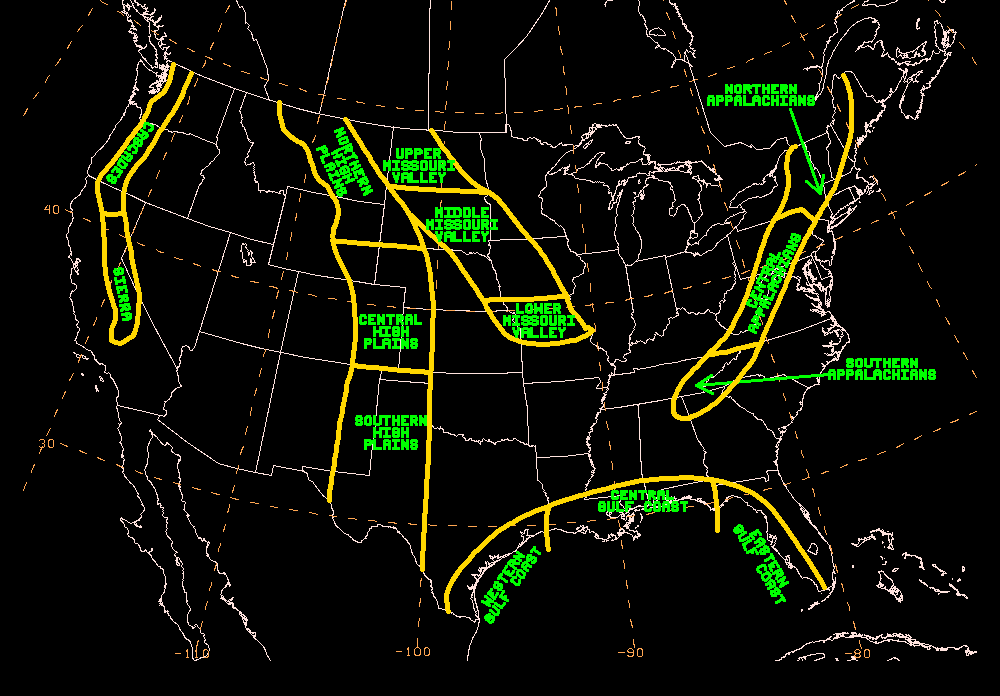
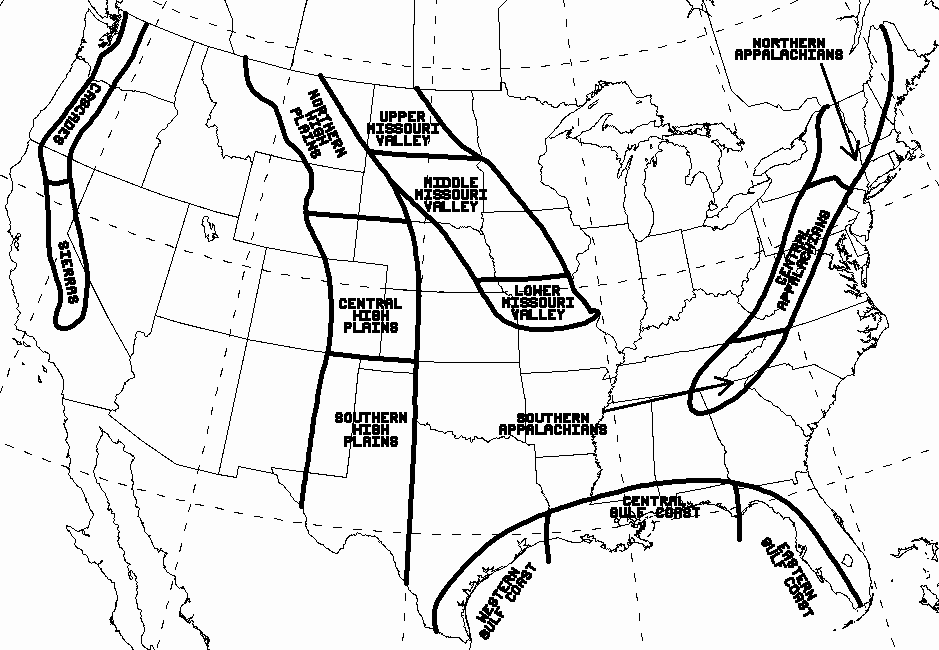
thunderstorms.  It appears that coastal sections of Texas will see the
highest chance of receiving heavy rainfall into tonight as some influx of
tropical moisture from the Gulf of Mexico could interact with the weak
front under a broad upper-level southwesterly flow ahead of a trough.  A
moderate risk of excessive rainfall remains in place from the mid and
upper Texas coast to southwestern Louisiana through tonight.
Thunderstorms across other areas of the southern tier states are not
expected to be severe, but they could result in localized flooding issues
from time to time.  The same is true along the East Coast with a slight
risk of excessive rainfall over portions of the Carolinas through Friday
night where storms are expected to be more numerous.  Meanwhile, showers
and a few embedded thunderstorms across New England will clear out by
Friday as a low pressure wave moves away into eastern Canada.


Kebede/Kong


Graphics available at
https://www.wpc.ncep.noaa.gov/basicwx/basicwx_ndfd.php
 weather.gov