Extended Forecast Discussion
NWS Weather Prediction Center College Park MD
311 AM EDT Thu Oct 22 2026

Valid 12Z Sun Oct 25 2026 - 12Z Thu Oct 29 2026


...Heavy rainfall likely for the Western High Plains and the
Florida East Coast through Monday...


...Overview...

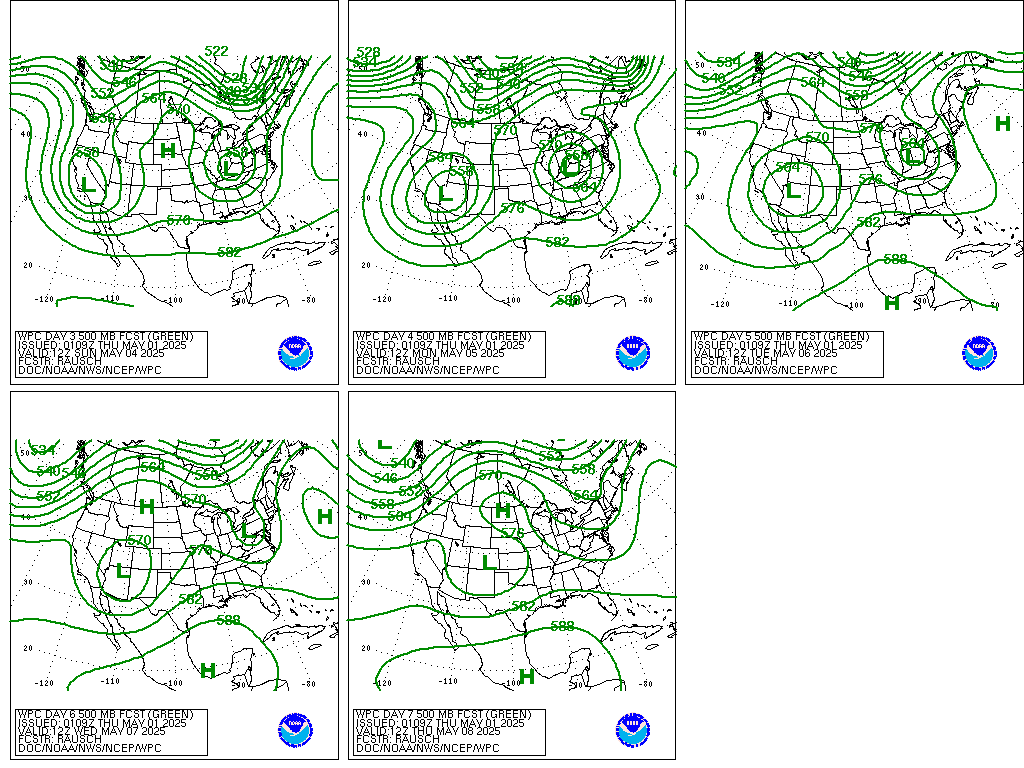
The active weather pattern that will be in place across the central
and southern Rockies Saturday will reach the western High Plains on
Sunday with numerous showers and storms ahead of a southern stream
trough. This should weaken going into early next week as the trough
deamplifies and a modest upper ridge develops from the Deep South
to the Ohio Valley. A closed upper low crosses the Pacific
Northwest Monday and then crosses the northern tier while likely
evolving into a northern stream trough. More of a quasi-zonal flow
pattern is expected by the end of the forecast period Thursday with
no major weather systems currently expected for the middle to end
of the work week.

...Guidance/Predictability Assessment...

The majority of the 00Z model guidance is in reasonable agreement
across the Continental U.S. to begin the period on Sunday. Recent
runs of the GFS and to a lesser extent the GEFS mean have been
farther west with the placement of the upper low approaching the
Pacific Northwest. By Tuesday, noticeable spread in the guidance is
apparent across the western U.S. as the low/trough moves inland,
with the UKMET and CMC more progressive, and the GFS slower, with
the ECMWF being a more middle ground solution. The AI guidance was
generally closer with the ECMWF and ECENS mean, and these models
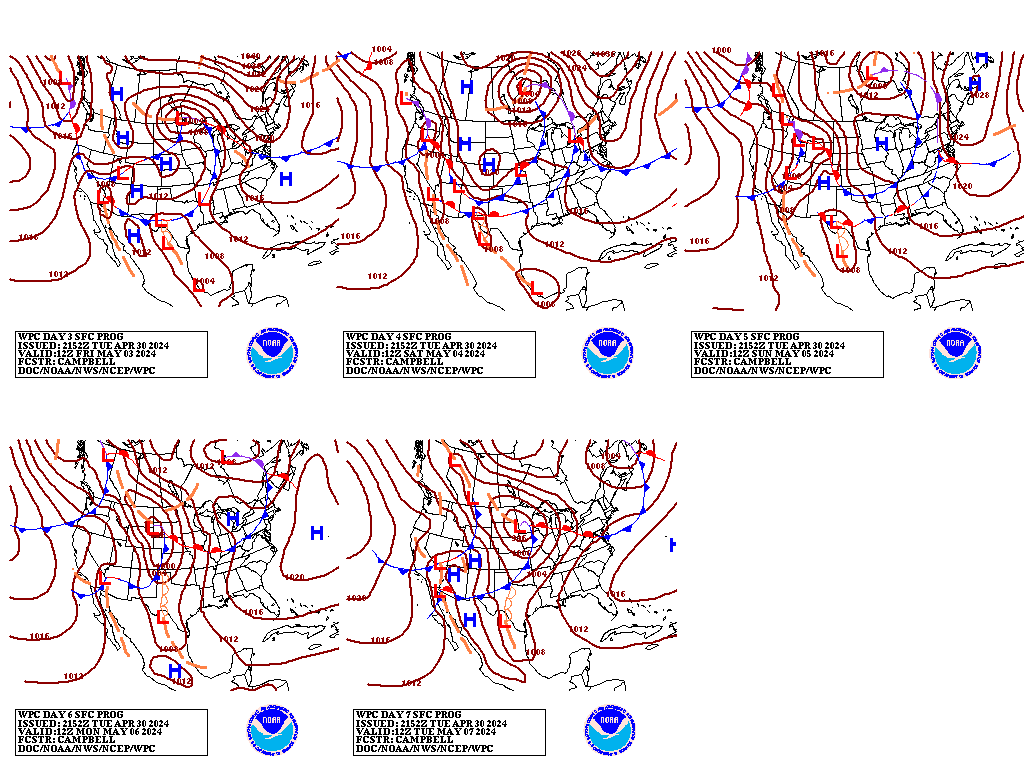
were weighted more for the fronts and pressures. The NBM appeared
a little too cool for temperatures across portions of the West,
Central and southern Plains, and the Gulf Coast region when
compared to the model consensus, so highs and lows were adjusted
about 1-3 degrees higher for these areas. QPF was also raised
across the north-central U.S. where the NBM appeared light.

...Weather/Hazards Highlights...

The main thing making weather headlines will be the likelihood of
heavy rainfall and thunderstorms from the Texas Panhandle to
Nebraska on Sunday, with divergent flow aloft ahead of an incoming
shortwave trough. The potential exists for 1-2 inch rainfall totals
with isolated higher amounts, and some instances of flooding are
possible where multiple rounds of convection develop. The rainfall
intensity should abate some going into early next week, with light
to moderate rainfall stretching from western Texas to the Upper
Midwest.

Elsewhere across the country, strong onshore flow to the north of
a frontal boundary across central and southern Florida will support
the development of moderate to heavy showers that will likely
affect the East Coast counties, with some areas getting a few
inches of rain by Tuesday morning and could be enough to produce
some instances of flooding. Out West, some light snow will be
possible for the higher elevations of the northern Rockies as the
closed low/trough from the Pacific Northwest moves inland early
next week.

Warm temperature anomalies will be most evident from the southern
Plains to the Upper Midwest and Great Lakes region through Monday
with highs running 5 to 15 degrees above normal. Some modest cool
anomalies can be expected across the Rockies and northwestern
Plains with readings up to 10 degrees below normal. Going forward
through mid-week, temperatures should be near to slightly above
normal for the central and eastern U.S., and near normal for the
West, with no extreme or record setting temperatures expected.

Hamrick


Additional 3-7 Day Hazard information can be found on the WPC
medium range hazards outlook chart at:
https://www.wpc.ncep.noaa.gov/threats/threats.php

WPC medium range 500mb heights, surface systems, weather grids,
quantitative precipitation forecast, excessive rainfall outlook,
winter weather outlook probabilities, heat indices and Key Messages
are at:

https://www.wpc.ncep.noaa.gov/medr/5dayfcst500_wbg.gif
https://www.wpc.ncep.noaa.gov/medr/5dayfcst_wbg_conus.gif
https://www.wpc.ncep.noaa.gov/5km_grids/5km_gridsbody.html
https://www.wpc.ncep.noaa.gov/qpf/day4-7.shtml
https://www.wpc.ncep.noaa.gov/#page=ero
https://www.wpc.ncep.noaa.gov/wwd/pwpf_d47/pwpf_medr.php?day=4
https://www.wpc.ncep.noaa.gov/heat_index.shtml
https://www.wpc.ncep.noaa.gov/#page=ovw
 weather.gov